Topic
Building a Music Startup
Founding, bootstrapping and running a music company: teams, co-founders, culture and the founder's journey. 88 conversations with founders, investors and experts, newest first.
Episodes (88)
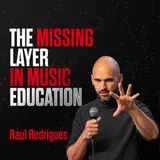
Raul Rodrigues, founder and CEO of Upbeat Studio, explains why drums are an underserved niche and how AI can finally add a teacher's judgment to music apps.
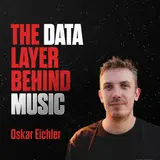
Songstats founder Oskar Eichler explains how his bootstrapped analytics platform tracks artist data and why AI is turning music into advertising for artists.
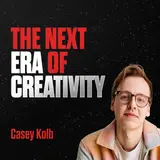
Casey Kolb, founder and CEO of Lunacy, explains why plugins must feel as good as they sound and how Nova lets people build them with AI.
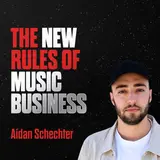
Aidan Schechter, CEO of Patchbay and partner at 1916 Enterprises, explains why independent music companies share the same workflows and need common software.
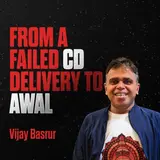
Vijay Basrur, founder of OKListen, explains how he bootstrapped an independent Indian music platform for over a decade before its acquisition by AWAL.
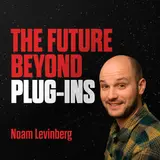
Noam Levinberg, founder of Safari Audio, on why AI-built plugins and prompt-based music tools may make DAWs and plugin companies obsolete.
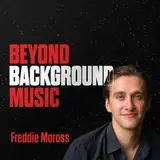
Freddie Moross, founder of Myndstream, explains how owning music assets powers functional soundtracks for spas, hotels and wellness spaces.

Viktrs founder Mark Bamford explains how tracking viewer curiosity inside a video earns artists far more than YouTube pays, and why he expanded beyond music.
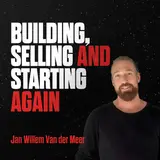
Jan Willem, co-founder of Momants and Paylogic, describes his five-year ticketing exit and why he still bets on founders.
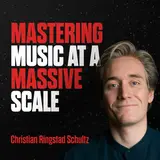
Christian Ringstad Schultz, CEO of Masterchannel, explains how proprietary AI mastering and a white-label API built a profitable, lean music tech company.
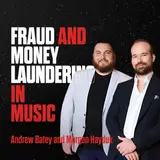
Beatdapp co-founders Andrew Batey and Morgan Hayduk explain how streaming royalty fraud and money laundering work, and how AI music changed the game.
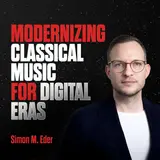
Simon M. Eder, co-founder of Primephonic, explains how solving classical music's metadata problem led Apple to acquire his startup as Apple Music Classical.
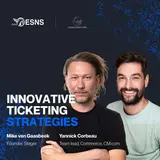
Stager's Mike van Gaasbeek and CM.com's Yannick Corbeau on why ticketing startups get bought, why signing fees are loans, and who really sets the fees.
Tom Höglund of Epidemic Sound explains the model that pays musicians upfront and splits future revenue fifty-fifty after every collecting society refused.
Ben Mendoza, CEO of Beatchain, explains how AI quality control, local payment systems and white-label partners help independent artists get discovered and paid.
Armada CEO Seamus Menihane, who turned a screen-printing hustle into a 170-person merch company, explains how tour and e-commerce merch deals actually work.
Edward Ginis, co-founder of OpenPlay, explains how the platform frees music companies from distributors that trap catalog data and slow commercial deals.
Vishal Ramakrishnan of Round explains why music marketing shifted from celebrities to micro-creators and how the company grew without raising capital.
Mag Rodriguez, founder and CEO of EVEN, explains how the platform lets artists sell music directly to fans before release, using pay-what-you-want pricing.
Adam Fine, head of music and audio at Fiverr, explains how AI tools and remote freelance work are reshaping music production careers.
David Ronan, founder and CEO of RoEx, explains how AI mixing and mastering tools get a track to ninety percent so a human can finish the creative ten percent.

Erik Herrström of Studio Herrström explains why music tech brands look alike and how founders should test a brand before pitching it to investors.

Collette Tibbetts, founder of the angel syndicate Joker Deck, explains why music tech investing is risky and why smaller checks work better.

Sleeve founder Anna Lidell explains why streaming pays artists too little and how a small paying fanbase can earn a musician more than thousands of streams.
Tom Allen, CTO of Downtown Music Group and founder of Curve, explains how he bootstrapped royalty accounting software all the way to acquisition.
Joseph Perla, founder of Hangout.fm and creator of TurnTable.fm, explains why music licensing took four years to secure before launch.
Clémentin Diard, founder of Control Reach, explains why raising money for a music marketing startup is so slow and why the company moved fully to B2B clients.
Xavier Péters, CEO of LeanSquare, explains how the fund picks late-seed music tech startups, why team matters most, and why Wallifornia helps validate deals.
Noctil founder Jacob Varghese explains how machine learning matches royalty data and why black box money sits unpaid when rights ownership cannot be confirmed.
Alexandre Turbide and Nicholas Laroche of BeatConnect explain why they built a collaborative DAW on Unity and switched from a paid model to freemium.
Antony Demekhin, CEO and co-founder of Tuney, explains why his ethical AI music tools skip scraped training data and aim to simulate real music production.
Yusuke Sugino, president and CEO of Yamaha Music Innovations, explains why Yamaha is investing in music tech and how its new fund plans to support startups.
Jody McKinley, founder of Eleven75, explains how fractional specialists help early-stage music companies with revenue, product and licensing needs.

Ciarán O'Toole & Michael Coll
Songbox founders Ciarán O'Toole and Michael Coll on bootstrapping a private music-sharing platform for four years, and how Bryan Adams became a co-founder.

Thais Ruiz de Alda
Thais Ruiz de Alda of Digital Femmes explains why music metadata never captured gender, and how that gap skews streaming recommendations toward men.
Dan Fowler explains why streaming growth masks a real plateau, why consolidation is squeezing music tech, and where opportunity still exists.
Michael Jacob, CEO of Lemonaide Music, explains how his AI beat-making tools pay artists under legal contracts and aim to protect musician income.
Ola Sars, founder of Soundtrack, explains why businesses pay fifty dollars for a music subscription and how the company started as a Spotify joint venture.
Maciej Dulski, co-founder of MusicTech Lab, explains why boring B2B fixes for metadata and licensing beat flashy consumer apps in music tech.
Tajdar Khan, partner at Amplitude Ventures, explains why music is a passion economy and where B2B solutions actually make money in it.
 1 h 8 min
John Samuel Gerhart and Chris Santillo share how they went from LA's grind to signing with Simon Cowell and founding the artist-centric label Lightworks.
Takayuki Suzuki of MusicTech Japan discusses Japan's CD dominance, fan club monetization, tiered storytelling, and what Western artists can learn.
Andrea Rosen of Best Nights VC explains why music is a catalyst for nightlife, why music tech is broken, and what founders must fix to attract investors.
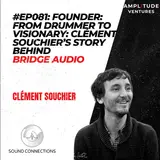
Clément Souchier, founder of Bridge Audio, discusses building a neutral platform for music assets and using AI to improve discovery.
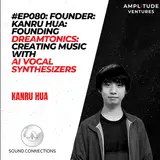
Kanru Hua, founder of Dreamtonics, talks about building AI vocal synthesizers as instruments and his path from hobbyist programmer to music tech founder.
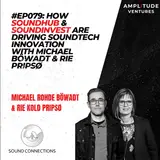
Michael Böwadt and Rie Pripsø explain how SoundHub and SoundInvest support hardware-based SoundTech startups with acceleration and funding.
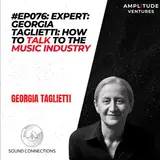
Georgia Taglietti, founder of the International Consulting Network for the Arts, explains how tech startups can communicate with the music industry.
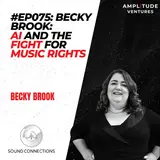
Becky Brook explains how AI is changing music licensing, from PRS and PPL collective licenses to generative model training and copyright.
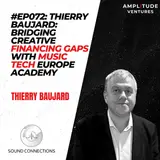
Thierry Baujard of MediaDeals discusses why music tech lacks investors and how the Music Tech Europe Academy prepares startups for financing.
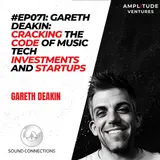
Gareth Deakin of Sonorous explains why music tech startups struggle to raise venture capital and how founders can reframe to attract investors.
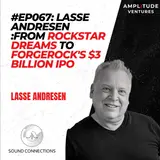
Lasse Andresen, founder of ForgeRock, on leaving music, building a $3 billion identity software company, and using tech to help artists earn a living.
Christopher Wieduwilt, the AI Musicpreneur, explains how musicians can use AI tools to automate content, amplify storytelling, and build new revenue streams.
Mansoor Rahimat Khan, co-founder and CEO of Beatoven.ai, explains how the company trains generative music on licensed artist data.
Sharmin Sultana Sumi, founder of Chirkutt and Salt Creatives and Events Limited, on original music, audience connection, and supporting art through business.
Patrick Ermlich, artist guide, explains why artists need business skills, first principles, and the right team to build sustainable music careers.
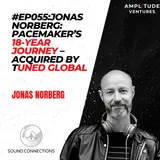
Jonas Norberg, Head of AI at Tuned Global, shares Pacemaker's 18-year journey from iPod hardware to Spotify integration, AI DJ, and an eventual acquisition.
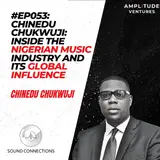
Dr. Chinedu Chukwuji of Purple Blue Academy of Music Business on local content rules, streaming, and diaspora listeners that took Nigerian music global.
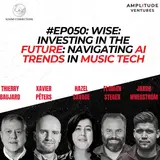
Xavier Péters, Thierry Baujard, Hazel Savage, and Florian Stadler discuss team, timing, and proprietary AI when deciding which music tech startups to back.
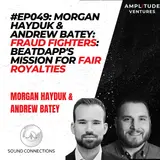
Morgan Hayduk and Andrew Batey, co-founders of Beatdapp, explain how they built streaming fraud detection and raised a $17 million Series A.
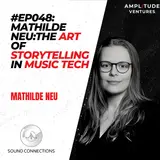
Mathilde Neu, founder of Resonance Agency and co-founder of Music Tech France, explains why founders must adapt their message to reach the music industry.
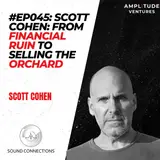
Scott Cohen shares how The Orchard survived $3 million in debt to become one third of iTunes and sell to Sony, and why JKBX lets fans invest in hit songs.
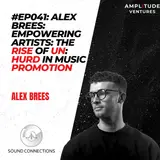
Alex Brees, founder and CEO of un:hurd, explains how the platform brings major-label marketing tools to independent artists at an affordable price.
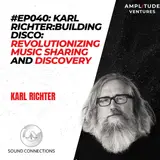
Karl Richter, founder of Disco, explains how a personal file-sharing fix became a music supervision platform, and why founder stress never fully goes away.
Hazel Savage, VP of Music Intelligence at SoundCloud and former Musiio CEO, explains how she built an AI music-tagging startup and sold it to SoundCloud.

AI Jake reports on BandLab passing 100 million users, its free music creation tools, and the d4vd success story behind 'Romantic Homicide'.
Agnes Chung, co-founder of Musicube, on building AI-driven music search in Hamburg and why the startup chose to be acquired by Songtradr.
AI Jake reports independent artists and labels earned $4.5 billion from Spotify in 2023, half of its payouts and four times their 2017 earnings.
Mogul founder Jeff Ponchick, who sold Repost to SoundCloud, on why no artist he interviewed felt confident they were paid in full, and how Mogul fixes that.
Peder Jørgensen, founder of Hance.ai and co-founder of Soundly, explains how machine learning for audio enables noise removal and live stem separation.
Music tech advisor Amanda Schupf explains why founders misdiagnose problems, what makes a pitch deck work, and why fundraising takes months to close.
Con Raso, founder and CEO of Tuned Global, explains building a music licensing platform with 130 million tracks and expanding into Southeast Asia.
Mischa Sigtermans, founder of Stagent, explains how the booking platform got built, funded and merged with a longstanding rival.
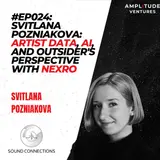
Svitlana Pozniakova, CEO of Nexro, explains how her royalty-exchange startup pivoted into an AI platform that predicts artist careers for labels.
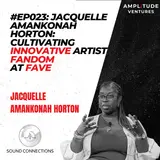
Jacquelle Horton, founder of Fave, explains how the platform verifies superfan activity and gives artist teams data on their most engaged fans.
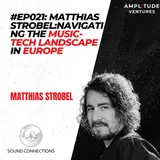
Matthias Strobel, founder of MusicTech Germany, explains why small markets lack music tech startups and why founders need a network as much as a product.
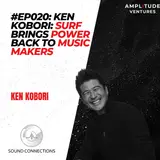
Ken Kobori, founder of Surf, explains how AI reference search and direct pitching let songwriters reach labels without a middleman.
Jørgen Iden, co-founder and CEO of Crescat, explains how collaborative software replaces outdated riders and running orders in live event production.

Einar Helde, co-founder of AIMS API, explains how his bootstrapped machine-learning search finds catalog tracks by feel for production music companies.
Jakob Wredstrøm, CEO of Capella, explains why he built the company around his own weaknesses and why public ambition kept him accountable in Stavanger.
Caroline Ravn, a young music industry professional in Copenhagen, explains why founders stay CEO too long and how young talent gets trapped.
Jesper Skibsby, founder and CEO of WARM, explains how a Polish radio royalty gap led him to build global radio monitoring for independent artists and labels.
Jakob Løkkegaard, co-founder of W.A.S. Entertainment, explains how the artist management firm survived years of unpaid founders before selling a Sony stake.
Christian Ringstad Schultz, co-founder and CEO of Masterchannel, on AI mastering software, aligning co-founders, and expanding a Norwegian startup globally.
Hannes Andersson, COO of Oeksound, explains how Soothe spread through word of mouth and why the team shields developers from customer noise.
Jonas Krossli & Kristian Wredstrøm
Timbre co-founders Kristian Wredstrøm and Jonas Krossli look back on their failed music IP investing platform and what it cost to lack industry standing.
Capella Entertainment co-founders Jonah Bjerga and Moi Sultan explain the three mantras and ownership model that built a fast-growing team without big salaries.
Sondre Pedersen, CEO of Mintix, explains how blockchain ticketing lets venues and artists earn a share of the secondary ticket market.
Capella Entertainment's founders explain how pitching music as IP won over investors and helped them build seven companies in under two years.
Questions these episodes answer
Why do most people quit learning an instrument like drums in the first year?
Rodrigues says drums are a beginner's market. Upbeat's own numbers show about 20 million active drummers and 10 million new ones starting every year, but 70 to 90 percent abandon the instrument within their first year, so Upbeat measures lifetime value across its whole app suite rather than any single tool's retention.
From: Rethinking Music Education Through AI and Personalized Learning
How is AI changing music education compared to free content on YouTube?
Rodrigues argues online education became content driven and free, like YouTube, which replaced a teacher's material but not a teacher's judgment. AI adds the missing layer, reading how a student feels and recommending the next exercise, the same things a good teacher does, so platforms that only supply content will have to add this layer or lose ground to new competitors.
From: Rethinking Music Education Through AI and Personalized Learning
Why did Upbeat Studio choose to focus on drums instead of piano or guitar?
Piano and guitar make up 70 to 80 percent of the music education market, so Rodrigues chose drums because the niche is comparatively underserved, at only 7 to 8 percent, with roughly 20 million active drummers and 10 million newcomers a year, giving Upbeat room to become a leading player in a smaller market.
From: Rethinking Music Education Through AI and Personalized Learning
Will AI replace human music teachers?
Rodrigues does not think teachers disappear. He expects big platforms to add an AI layer that reads a student's mood and recommends content, closing the gap with a real teacher, while some learners will keep choosing a human teacher they trust, especially one who actually plays the instrument, even as that becomes a more premium option.
From: Rethinking Music Education Through AI and Personalized Learning
What business model could instrument makers use as AI improves?
Rodrigues expects instrument manufacturers to sell hardware cheaply, for example a drum kit, and profit from a subscription that bundles guided lessons and feedback into the kit itself, similar to Nespresso or Peloton. He sees this as a stronger position than a general AI chatbot because the manufacturer already controls the instrument experience.
From: Rethinking Music Education Through AI and Personalized Learning
Why did Songstats stay bootstrapped instead of raising investment?
Oskar Eichler funded the company from the proceeds of an earlier exit and chose to stay independent. He says being bootstrapped and profitable means no investor tells the team what to do, which he calls a great position to be in.
How did Oskar Eichler get his start in music technology?
As a teenager he ran YouTube mixtape channels using licensed catalogs from electronic labels, grew one past a million subscribers, then sold it for just over 20,000 euros at 19 and moved into running a multi-channel network in Shanghai.
How did Songstats relaunch itself after two slow years?
After spending two years with only about 100 users, a major label launched a slick but technically weak artist app. Seeing that push, the team rebuilt with a new name, dark mode and better UI within four months, right as COVID began.
How is Songstats using AI to reach artists now?
Songstats launched an MCP server so AI assistants such as ChatGPT, Claude or Gemini can pull an artist's data directly and answer questions like how a new release compares to earlier ones, without opening the app or dashboard.
Why does Songstats also sell to enterprises instead of only artists?
Enterprise deals with booking agencies, distributors, management firms and labels take longer to close but are more predictable and worth more per contract than selling to artists one at a time, so Songstats built an API and data-deal business alongside its consumer app.
Why should a music plugin look as good as it sounds?
Casey Kolb of Lunacy says plugins are creative tools, and old plugins that were just walls of knobs intimidated new producers. Lunacy blends immersive visuals with simplified controls so producers feel inspired when they open a plugin, while deeper modulation and routing stay tucked away for people who want them.
How does Lunacy decide what to charge for a plugin?
Kolb wants plugins to feel premium without feeling like a splurge, so Lunacy prices them around thirty to forty dollars, enough that a buyer takes it seriously but does not regret the purchase. He compares it to buying a group of friends coffee. Lunacy rarely discounts more than forty percent, and never more than fifty even on Black Friday, to protect value for people who already paid full price.
People
- Raul Rodrigues
- Oskar Eichler
- Casey Kolb
- Aidan Schechter
- Vijay Basrur
- Noam Levinberg
- Freddie Moross
- Mark Bamford
- Jan Willem
- Christian Ringstad Schultz
- Andrew Batey
- Morgan Hayduk
- Simon M. Eder
- Mike van Gaasbeek
- Yannick Corbeau
- Tom Höglund
- Ben Mendoza
- Seamus Menihane
- Edward Ginis
- Mag Rodriguez
- Adam Fine
- David Ronan
- Erik Herrström
- Collette Tibbetts
- Anna Lidell
- Tom Allen
- Joseph Perla
- Clémentin Diard
- Xavier Péters
- Jacob Varghese
- Alexandre Turbide
- Nicholas Laroche
- Antony Demekhin
- Yusuke Sugino
- Jody McKinley
- Ciarán O'Toole
- Michael Coll
- Thais Ruiz de Alda
- Dan Fowler
- Michael Jacob
- Ola Sars
- Maciej Dulski
- Tajdar Khan
- John Samuel Gerhart
- Chris Santillo
- Takayuki Suzuki
- Andrea Rosen
- Clément Souchier
- Kanru Hua
- Michael Böwadt
- Rie Pripsø
- Georgia Taglietti
- Becky Brook
- Thierry Baujard
- Gareth Deakin
- Lasse Andresen
- Christopher Wieduwilt
- Mansoor Rahimat Khan
- Sharmin Sultana Sumi
- Patrick Ermlich
- Jonas Norberg
- Dr. Chinedu Chukwuji
- Mathilde Neu
- Scott Cohen
- Alex Brees
- Karl Richter
- Hazel Savage
- Agnes Chung
- Jeff Ponchick
- Peder Jørgensen
- Amanda Schupf
- Con Raso
- Mischa Sigtermans
- Svitlana Pozniakova
- Jacquelle Amankonah Horton
- Matthias Strobel
- Ken Kobori
- Jørgen Iden
- Einar Helde
- Jakob Wredstrøm
- Caroline Ravn
- Jesper Skibsby
- Jakob Løkkegaard
- Hannes Andersson
- Jonas Krossli
- Kristian Wredstrøm
- Jonah Bjerga
- Moi Sultan
- Sondre Pedersen