Guest
Mark Bamford
Mark Bamford is Founder at Viktrs, as introduced on the show.
Episodes (1)
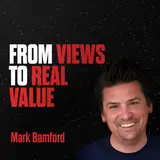
Viktrs founder Mark Bamford explains how tracking viewer curiosity inside a video earns artists far more than YouTube pays, and why he expanded beyond music.
Questions these episodes answer
How does Viktrs make more money per video view than YouTube?
Instead of running ads around a video, Viktrs tracks what a viewer is curious about inside it, like a pair of shoes or a location, and turns that curiosity into clicks, purchases and data. Bamford says this has generated up to 150 times more revenue per view than YouTube's model, and up to 900 times in some projects.
From: What It Takes to Build Music Tech in a Resistant Industry
Why don't major record labels innovate faster?
Bamford says big companies follow rather than innovate because their boards exist to drive efficiency and scale an already-working model. Label innovation teams tend to ask if something already works for many artists at a large revenue mark, which is adoption of something proven rather than genuine disruptive innovation.
From: What It Takes to Build Music Tech in a Resistant Industry
Why did Viktrs expand beyond music into politics, cooking and fashion?
Investors would not fund a pre-revenue business pitched purely as helping music artists, since that reads as an emotional pitch rather than a scalable one. Non-music budgets also turned out to be far bigger, with one two-week political video project earning Viktrs $26,000.
From: What It Takes to Build Music Tech in a Resistant Industry
What should a music tech founder do differently in a second funding round?
Host Jakob Wredstrøm argues that playing on sentiment works early but stops once the first risk capital has been deployed, so by round two investors stop believing the story. His advice, which Bamford accepts, is to get to revenue and proof points as fast as possible and show a tangible, realistic result.
From: What It Takes to Build Music Tech in a Resistant Industry
Why does Bamford still want to work with independent music artists?
He argues that even though budgets are small or nonexistent at the grassroots level, independent artists are the foundation the whole industry's culture is built on, and if nobody builds sustainable models for them, that grassroots creativity will wither.
From: What It Takes to Build Music Tech in a Resistant Industry