Topic
Creator Economy
Tools, platforms and income for independent creators, from YouTube and video monetisation to creator marketplaces. 22 conversations with founders, investors and experts, newest first.
Episodes (22)
Jacquelle Amankonah Horton, founder of Fave, explains what superfans want beyond merch and why fan-to-fan commerce is the real fandom market.
Michael Bizenov of Sound Royalties explains how music creators get cash advances against royalty income without losing ownership of masters or copyrights.
Niclas Molinder, founder of Session, explains why missing metadata costs music creators royalties and why capturing it should become mandatory.
John Lister, Head of Community at Rap Fame, explains why the app's mostly-artist audience rates, mentors and pays to promote each other's music.
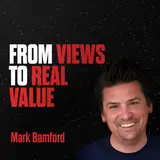
Viktrs founder Mark Bamford explains how tracking viewer curiosity inside a video earns artists far more than YouTube pays, and why he expanded beyond music.
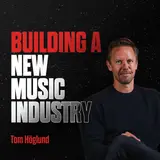
Tom Höglund of Epidemic Sound explains the model that pays musicians upfront and splits future revenue fifty-fifty after every collecting society refused.
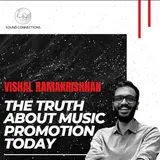
Vishal Ramakrishnan of Round explains why music marketing shifted from celebrities to micro-creators and how the company grew without raising capital.
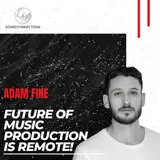
Adam Fine, head of music and audio at Fiverr, explains how AI tools and remote freelance work are reshaping music production careers.
Megh Vakharia and Chuka Chase, co-founders of Symphony, explain how their artist marketing agency became a DIY tool for every creator.
Joseph Perla, founder of Hangout.fm and creator of TurnTable.fm, explains why music licensing took four years to secure before launch.
Alexandre Turbide and Nicholas Laroche of BeatConnect explain why they built a collaborative DAW on Unity and switched from a paid model to freemium.
Dan Fowler explains why streaming growth masks a real plateau, why consolidation is squeezing music tech, and where opportunity still exists.
Clément Souchier, founder of Bridge Audio, discusses building a neutral platform for music assets and using AI to improve discovery.
Daniel Rowland of LANDR explains how AI mastering grew into a full creator platform and why he thinks AI will assist producers instead of replacing them.
Dr. Kobi Abayomi explains how AI music models train on copyrighted songs, why attribution is solvable, and what that means for creator livelihoods.
Josh Greenberg of Green Mountain Lodge explains how superfans are defined by engagement and how artists can build recurring revenue with productized offers.
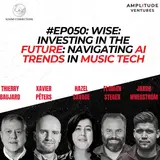
Xavier Péters, Thierry Baujard, Hazel Savage, and Florian Stadler discuss team, timing, and proprietary AI when deciding which music tech startups to back.
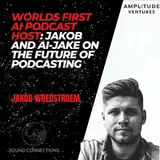
Jakob Wredstrøm tests an AI clone of himself as a podcast co-host on Sound Connections, exploring AI ethics and the future of music interviews.
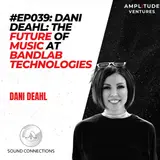
Dani Deahl, head of communications at BandLab, on the app's growth to 100 million users and why AI should support, rather than replace, human creators.
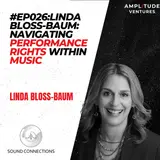
Linda Bloss-Baum, formerly of SoundExchange, explains why US terrestrial radio still doesn't pay performers, and why that keeps failing in Congress.
Drew Thurlow, a music industry consultant and former Pandora and Sony Masterworks executive, on how AI is reshaping session work, royalties and copyright law.
Ken Kobori, founder of Surf, explains how AI reference search and direct pitching let songwriters reach labels without a middleman.
Questions these episodes answer
What do superfans actually want to spend money on beyond official merchandise?
Horton says demand isn't the problem, fans already have disposable income for fandom but too few things worth buying. Official merchandise works as a keepsake, but day to day fans wear subtle items built from community inside jokes: a bag carrying a phrase only fans recognize, hand fans for a hot venue queue, or a resold Letterman jacket.
How does Fave help artist teams work with fan creators?
Fave gives artist teams a way to spot the fans already driving activity in their community, then clear their ideas and IP questions so those fans can create and sell without guessing whether it is allowed. Horton says many fans hold back ideas out of fear it might not be permitted, so removing that uncertainty turns a fan's side project into something the artist team can support.
Why do fans hold back on turning their ideas into products or events?
Fans often do not know whether an idea uses the artist's IP in a way that is allowed, so many sit in doubt about whether it is a gray area or forbidden outright. Rather than risk it, they hold back, which means the artist loses the extended engagement that idea could have created and the fan misses out on what could have become a real business.
Is the fandom market bigger than the widely quoted figures suggest?
Horton says the commonly cited $4 billion fandom figure understates the real number. Fan-to-fan sales of items like resold Letterman jackets often match or beat official merchandise prices, and once you count fan-run product lines, experiences and events, the volume rivals premium official offerings and the market is significantly larger than the older estimate.
Where does Fave focus within the fandom market?
Horton splits the fandom market into three parts: artist-to-fan tools and communication, fan communities interacting with each other, and fans exchanging and selling to each other. She says the first two are already served by existing platforms, so Fave focuses on the third, fan-to-fan commerce, which she sees as the least understood and fastest growing.
How do music royalty advances differ from a bank loan?
Sound Royalties gives advances against royalty income rather than lending against credit. It asks for no personal guarantee, no credit history check and no share of future profits, structuring each deal as a fixed payment over a fixed term instead of an equity-like stake.
From: The Business of Turning Music Royalties into Growth Capital
What financial profile qualifies a creator for royalty financing?
A creator needs about $400 a month in royalty income to qualify, and deals scale from small amounts up to eight figures. Underwriting weighs roughly 12 to 14 inputs such as catalog concentration, song age, genre decay curves and who is paying the royalties.
From: The Business of Turning Music Royalties into Growth Capital
Why doesn't Sound Royalties become a label or distributor?
Staying purely in financing keeps the company neutral, so labels, distributors and publishers refer clients because Sound Royalties never competes for their role. It also never takes a share of profits or a right of first refusal, which protects the trust that keeps referrals coming.
From: The Business of Turning Music Royalties into Growth Capital
How does Sound Royalties value future royalty income?
Instead of valuing a catalog like a stock, the company projects income deal by deal, applying decay curves based on genre, song age and whether income comes from one-off sync placements or steady long-term catalog performance, aiming to keep the advance below what a creator could struggle to repay.
From: The Business of Turning Music Royalties into Growth Capital
What is Michael Bizenov's advice for founders building music finance companies?
Start narrow rather than trying to serve everyone. Sound Royalties began working with only two payors, ASCAP and BMI, then grew gradually to more than 250 as it built expertise and reputation, reinvesting knowledge from each deal instead of expanding too fast.
From: The Business of Turning Music Royalties into Growth Capital
Why do creators lose royalties even when their music gets used?
Molinder says every royalty problem he investigated traced back to the same cause: the people who actually created a song were never identified. Once physical formats with printed credits disappeared, nobody recorded who contributed what during the session, so labels, publishers and collecting societies have no way to reconstruct it later, and the money sits unclaimed.
Why did Session decide to be free to use?
Molinder credits his investors Max Martin and Björn Ulvaeus with insisting the entry tier stay free, since a barrier to entry would stop two creators in the same room from collaborating on capturing their credits. Session runs as a freemium product, with paid storage the only tier that costs money.