Guest
Drew Thurlow
Drew Thurlow is Music Industry Consultant, as introduced on the show.
Episodes (1)
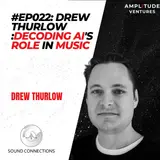
Drew Thurlow, a music industry consultant and former Pandora and Sony Masterworks executive, on how AI is reshaping session work, royalties and copyright law.
Questions these episodes answer
Why does Drew Thurlow say AI directly threatens session musicians?
Thurlow, a former session bass and guitar player, says a generated AI bass stem can now replace the paid studio work he used to get called in for, and that same shift extends to entire songs once someone can text-prompt music into existence. He says the fear this creates among musicians is justified, even as he argues the industry will adapt the way it has to past technology shocks.
How many songs are being released now, and how many actually get listened to?
Thurlow says there are now more than 200 million commercially released songs in the industry's database, with 12 to 14 million more released every three months. He says only about 600,000 of those, roughly 0.3%, get streamed enough times a year to justify their hosting costs, meaning almost none of what gets released actually reaches an audience.
How are music labels responding to AI companies this time, compared to Napster?
Thurlow says labels sued Napster and rival file-sharing services into oblivion, then launched their own service, Press Play, far too late to matter. This time, major labels have created partner management teams that work with emerging AI companies like Endel to build new revenue streams instead of suing them.
What does Drew Thurlow think the music industry can do to monetize AI-generated music?
Thurlow says the value shifts from the song itself to the creator using the app, since platforms like Boomy already let people text-prompt songs and distribute them at scale. He imagines revenue coming from in-app purchases on sounds and beats, licensed AI vocals from known musicians, hosting fees, or upsells to video-syncing tools, treating the whole thing more like a gaming app than a music release.
Is it currently legal to train an AI model on copyrighted music without paying the original artists?
Thurlow says most people assume this would be illegal, but right now it sits in a legal gray area with no case law to settle it, and it may end up being considered fair use. He says a lot of VC money is waiting on the sidelines until courts, likely reaching the Supreme Court, decide whether companies training models on copyrighted work owe anything to the original rights holders.