Topic
Music Rights and Royalties
Copyright, publishing, collecting societies and how royalties are tracked, paid and recovered. 58 conversations with founders, investors and experts, newest first.
Episodes (58)
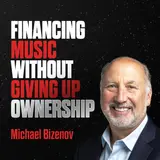
Michael Bizenov of Sound Royalties explains how music creators get cash advances against royalty income without losing ownership of masters or copyrights.
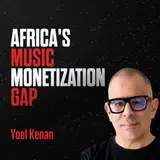
Yoel Kenan, founder of Africori, explains why African music consumption is high but revenue stays low, and where catalog and export investment should go next.
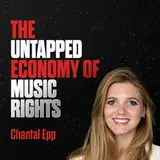
Chantal Epp, founder of ClicknClear, explains how her startup licenses music in bulk for cheerleading and sports events to unlock untapped revenue.
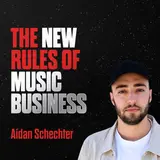
Aidan Schechter, CEO of Patchbay and partner at 1916 Enterprises, explains why independent music companies share the same workflows and need common software.
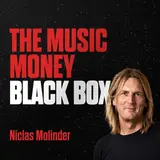
Niclas Molinder, founder of Session, explains why missing metadata costs music creators royalties and why capturing it should become mandatory.
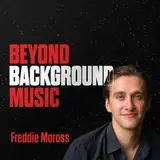
Freddie Moross, founder of Myndstream, explains how owning music assets powers functional soundtracks for spas, hotels and wellness spaces.
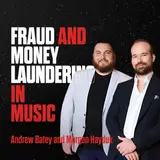
Beatdapp co-founders Andrew Batey and Morgan Hayduk explain how streaming royalty fraud and money laundering work, and how AI music changed the game.
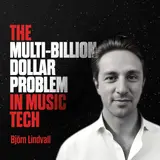
Björn Lindvall, CEO and co-founder of Music Infra, explains why outdated file formats and a disjointed supply chain leave rights holders underpaid.
Simon M. Eder, co-founder of Primephonic, explains how solving classical music's metadata problem led Apple to acquire his startup as Apple Music Classical.
Niklas Brantberg, CEO of Overtone Studios at Epidemic Sound, explains how mood music built a real royalty model and where AI fits into composing it.
Lior Tibon, CEO and co-founder of Duetti, explains how the company funds catalog buyouts with debt and equity and changes the industry incrementally.
Edward Ginis, co-founder of OpenPlay, explains how the platform frees music companies from distributors that trap catalog data and slow commercial deals.
Amplitude Ventures' Jakob Wredstrøm and Taj argue music tech investing has no real supporting data, few active angels, and mostly weak exits below $50 million.
Becky Brook, a music and technology advisor, explains why Suno and Udio's talks with major labels and new AI copyright rulings make music licensing murkier.

Sleeve founder Anna Lidell explains why streaming pays artists too little and how a small paying fanbase can earn a musician more than thousands of streams.
Yonas Aregai, chief of staff at Gold State Music, explains how the fund values and acquires music catalogs, using Alan Walker's career as a case study.
Tom Allen, CTO of Downtown Music Group and founder of Curve, explains how he bootstrapped royalty accounting software all the way to acquisition.
Hans Peter Roth, co-owner of Muserk, explains how the rights administrator recovers unclaimed publishing royalties and scaled to more than 20 million works.
Joseph Perla, founder of Hangout.fm and creator of TurnTable.fm, explains why music licensing took four years to secure before launch.
Noctil founder Jacob Varghese explains how machine learning matches royalty data and why black box money sits unpaid when rights ownership cannot be confirmed.
Antony Demekhin, CEO and co-founder of Tuney, explains why his ethical AI music tools skip scraped training data and aim to simulate real music production.
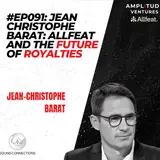
Jean Christophe Barat, founder of Allfeat, explains how blockchain-secured music metadata can fix unpaid royalties and open new web3 monetization for artists.
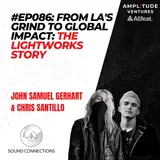 1 h 8 min
John Samuel Gerhart and Chris Santillo share how they went from LA's grind to signing with Simon Cowell and founding the artist-centric label Lightworks.
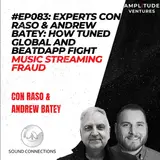
Con Raso of Tuned Global and Andrew Batey, founder of Beatdapp, explain how machine learning catches music streaming fraud and why it pays real artists more.
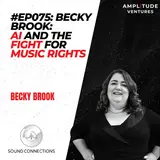
Becky Brook explains how AI is changing music licensing, from PRS and PPL collective licenses to generative model training and copyright.
Entertainment lawyer Priyanka Khimani of Khimani & Associates explains India's independent music ecosystem, copyright legacy and market entry for founders.

AI Jake explains the Spotify vs. MLC bundled royalties dispute and estimates a $46 million potential payout for US songwriters.

AI Jake on Sound Connections explains Will Page's completion model for music royalties: reward completed streams, curb fraud, and support fairer payouts.

Marzio F Schena, Co-founder and CEO of A-Note Music, explains how the platform lets investors buy music royalties, from a 200,000 euro first catalog.
Dr. Kobi Abayomi explains how AI music models train on copyrighted songs, why attribution is solvable, and what that means for creator livelihoods.

AI Jake covers RIAA lawsuits against Suno and Udio, plus ethical AI approaches from Beatoven.ai CEO Mansoor Rahimat Khan and Martin Clancy.
AI Jake reports TuneCore has paid over $4 billion to self-releasing artists and added another billion in 18 months, with 77% of new artists outside the U.S.

Daan Archer of Copyright Delta and Pål Bråtelund discuss why AI needs registered metadata and accountable infrastructure to pay music rights holders correctly.
AI Jake reports on Sony Music's advanced talks to buy Queen's catalog for a reported $1 billion, covering music, merchandising, logos and publishing.
Entertainment lawyer Jeff Liebenson, President of the International Association of Entertainment Lawyers, discusses AI training, fair use and music licensing.
Dr. Chinedu Chukwuji of Purple Blue Academy of Music Business on local content rules, streaming, and diaspora listeners that took Nigerian music global.
Serona Elton of the Mechanical Licensing Collective explains why songwriters miss royalties, how the MLC works, and what to do to collect what you are owed.
Morgan Hayduk and Andrew Batey, co-founders of Beatdapp, explain how they built streaming fraud detection and raised a $17 million Series A.
AI host AI Jake reports on Tencent Music's AI predictive model, subscription growth to 106.7 million paid users, and the legal risks of AI in music.
Scott Cohen shares how The Orchard survived $3 million in debt to become one third of iTunes and sell to Sony, and why JKBX lets fans invest in hit songs.
Dr. Martin Clancy explains AI-OK, his certification for ethical generative AI music, and why regulation cannot keep pace with how fast AI moves.
AI Jake reports independent artists and labels earned $4.5 billion from Spotify in 2023, half of its payouts and four times their 2017 earnings.

Pål Bråtelund of Music DNA explains how music tech companies can share data and revenue through collaboration instead of chasing an acquisition.
AI Jake reports on JKBX, a music investment platform backed by Spotify and Red Light Management that lets investors buy song royalties.
Hannah and Lena, co-owners of Sørveiv, explain how their Norwegian festival and conference connects artists, labels and music tech companies.
Michael Pelczynski of VoiceSwap, formerly of SoundCloud, explains the user-centric royalty model, the Lil Uzi Vert fan stat, and AI voice licensing.
Keatly Haldeman, founder and CEO of Dequency, explains why online sync licensing is broken and how blockchain could fix music rights.
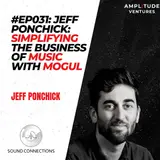
Mogul founder Jeff Ponchick, who sold Repost to SoundCloud, on why no artist he interviewed felt confident they were paid in full, and how Mogul fixes that.
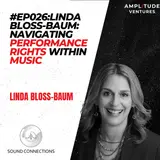
Linda Bloss-Baum, formerly of SoundExchange, explains why US terrestrial radio still doesn't pay performers, and why that keeps failing in Congress.
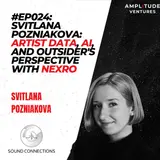
Svitlana Pozniakova, CEO of Nexro, explains how her royalty-exchange startup pivoted into an AI platform that predicts artist careers for labels.
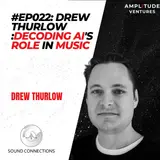
Drew Thurlow, a music industry consultant and former Pandora and Sony Masterworks executive, on how AI is reshaping session work, royalties and copyright law.
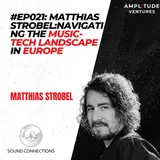
Matthias Strobel, founder of MusicTech Germany, explains why small markets lack music tech startups and why founders need a network as much as a product.
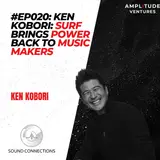
Ken Kobori, founder of Surf, explains how AI reference search and direct pitching let songwriters reach labels without a middleman.
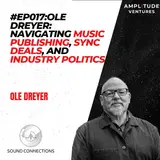
Ole Dreyer of Nordic Music NMS explains how publishing, sync licensing and collection societies work, and why AI companies need to pay for training music.
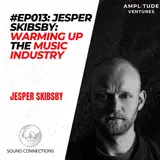
Jesper Skibsby, founder and CEO of WARM, explains how a Polish radio royalty gap led him to build global radio monitoring for independent artists and labels.
Jakob Løkkegaard, co-founder of W.A.S. Entertainment, explains how the artist management firm survived years of unpaid founders before selling a Sony stake.
Vickie Nauman, founder of Cross Border Works, explains why streaming capped superfan spending and where Web3 can bring it back.
Rasmus Rex of Roskilde University explains how pro-rata streaming royalties favor heavy listeners and why a user-centric model could cut fraud.
Questions these episodes answer
How do music royalty advances differ from a bank loan?
Sound Royalties gives advances against royalty income rather than lending against credit. It asks for no personal guarantee, no credit history check and no share of future profits, structuring each deal as a fixed payment over a fixed term instead of an equity-like stake.
From: The Business of Turning Music Royalties into Growth Capital
What financial profile qualifies a creator for royalty financing?
A creator needs about $400 a month in royalty income to qualify, and deals scale from small amounts up to eight figures. Underwriting weighs roughly 12 to 14 inputs such as catalog concentration, song age, genre decay curves and who is paying the royalties.
From: The Business of Turning Music Royalties into Growth Capital
Why doesn't Sound Royalties become a label or distributor?
Staying purely in financing keeps the company neutral, so labels, distributors and publishers refer clients because Sound Royalties never competes for their role. It also never takes a share of profits or a right of first refusal, which protects the trust that keeps referrals coming.
From: The Business of Turning Music Royalties into Growth Capital
How does Sound Royalties value future royalty income?
Instead of valuing a catalog like a stock, the company projects income deal by deal, applying decay curves based on genre, song age and whether income comes from one-off sync placements or steady long-term catalog performance, aiming to keep the advance below what a creator could struggle to repay.
From: The Business of Turning Music Royalties into Growth Capital
What is Michael Bizenov's advice for founders building music finance companies?
Start narrow rather than trying to serve everyone. Sound Royalties began working with only two payors, ASCAP and BMI, then grew gradually to more than 250 as it built expertise and reputation, reinvesting knowledge from each deal instead of expanding too fast.
From: The Business of Turning Music Royalties into Growth Capital
Why does African music generate so little revenue despite huge consumption?
Kenan says consumption across Sub-Saharan Africa is high but monetization lags badly. He forecast a billion-dollar recording market by 2017; thirteen years later it sits at about $110 million, held back by low-paying advertising-based streaming, weak telecom-linked subscriptions and unresolved rights splits.
From: Exporting African Music: Rights, Revenue, and Global Growth
Why is buying an African music catalog risky?
Catalog buyers face missing contracts, falsified reports and people who surface years later claiming ownership of recordings made decades earlier. Kenan says he was once given a falsified report and has faced rights disputes on other deals, so he now avoids catalogs whose sellers cannot produce paperwork.
From: Exporting African Music: Rights, Revenue, and Global Growth
Why haven't telecom companies succeeded with their own music platforms?
Telcos control payment and data bundles and have tried repeatedly to launch their own streaming products, but Kenan says none has managed to build a lasting music platform of its own, since users keep gravitating to YouTube and Spotify instead of a carrier's app.
From: Exporting African Music: Rights, Revenue, and Global Growth
Where would an investor get the best long-term return in African music?
Kenan would split money across catalogs whose audiences have not yet moved to streaming, such as gospel music, artists and songs with genuine export potential, and better marketing and data tools for the wider ecosystem, expecting returns only on a ten-to-fifteen-year horizon.
From: Exporting African Music: Rights, Revenue, and Global Growth
Why can't large sporting events license music song by song?
Epp says a single large cheerleading competition can use around 8,000 songs in one weekend, which makes clearing each track individually completely unworkable. That volume is exactly why ClicknClear built a blanket, low-fee licensing system instead of relying on traditional one-off sync deals.
From: Building the Infrastructure for Scalable Music Licensing
How does ClicknClear license music for video-on-demand content?
Epp says ClicknClear can grant blanket licenses directly for video-on-demand platforms where it already holds the necessary rights, and works with additional rights holders on a project basis when it needs broader coverage, alongside automated technology that mutes any track that has not been cleared.
From: Building the Infrastructure for Scalable Music Licensing
How big is the untapped micro-licensing market in music?
Epp estimates the global micro-licensing market at around 14 billion dollars a year in revenue the music industry is not currently collecting, spread across areas like sport and video-on-demand content that use music constantly but rarely pay for it properly.
From: Building the Infrastructure for Scalable Music Licensing
People
- Michael Bizenov
- Yoel Kenan
- Chantal Epp
- Aidan Schechter
- Niclas Molinder
- Freddie Moross
- Andrew Batey
- Morgan Hayduk
- Björn Lindvall
- Simon M. Eder
- Niklas Brantberg
- Lior Tibon
- Edward Ginis
- Becky Brook
- Anna Lidell
- Yonas Aregai
- Tom Allen
- Hans Peter Roth
- Joseph Perla
- Jacob Varghese
- Antony Demekhin
- Jean Christophe Barat
- John Samuel Gerhart
- Chris Santillo
- Con Raso
- Priyanka Khimani
- Marzio F Schena
- Dr. Kobi Abayomi
- Daan Archer
- Pål Bråtelund
- Jeff Liebenson
- Dr. Chinedu Chukwuji
- Serona Elton
- Scott Cohen
- Martin Clancy
- Michael Pelczynski
- Keatly Haldeman
- Jeff Ponchick
- Linda Bloss-Baum
- Svitlana Pozniakova
- Drew Thurlow
- Matthias Strobel
- Ken Kobori
- Ole Dreyer
- Jesper Skibsby
- Jakob Løkkegaard
- Vickie Nauman
- Rasmus Rex