Guest
Raul Rodrigues
Raul Rodrigues is Founder and CEO at Upbeat Studio, as introduced on the show.
Episodes (1)
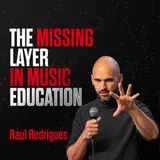
Raul Rodrigues, founder and CEO of Upbeat Studio, explains why drums are an underserved niche and how AI can finally add a teacher's judgment to music apps.
Questions these episodes answer
Why do most people quit learning an instrument like drums in the first year?
Rodrigues says drums are a beginner's market. Upbeat's own numbers show about 20 million active drummers and 10 million new ones starting every year, but 70 to 90 percent abandon the instrument within their first year, so Upbeat measures lifetime value across its whole app suite rather than any single tool's retention.
From: Rethinking Music Education Through AI and Personalized Learning
How is AI changing music education compared to free content on YouTube?
Rodrigues argues online education became content driven and free, like YouTube, which replaced a teacher's material but not a teacher's judgment. AI adds the missing layer, reading how a student feels and recommending the next exercise, the same things a good teacher does, so platforms that only supply content will have to add this layer or lose ground to new competitors.
From: Rethinking Music Education Through AI and Personalized Learning
Why did Upbeat Studio choose to focus on drums instead of piano or guitar?
Piano and guitar make up 70 to 80 percent of the music education market, so Rodrigues chose drums because the niche is comparatively underserved, at only 7 to 8 percent, with roughly 20 million active drummers and 10 million newcomers a year, giving Upbeat room to become a leading player in a smaller market.
From: Rethinking Music Education Through AI and Personalized Learning
Will AI replace human music teachers?
Rodrigues does not think teachers disappear. He expects big platforms to add an AI layer that reads a student's mood and recommends content, closing the gap with a real teacher, while some learners will keep choosing a human teacher they trust, especially one who actually plays the instrument, even as that becomes a more premium option.
From: Rethinking Music Education Through AI and Personalized Learning
What business model could instrument makers use as AI improves?
Rodrigues expects instrument manufacturers to sell hardware cheaply, for example a drum kit, and profit from a subscription that bundles guided lessons and feedback into the kit itself, similar to Nespresso or Peloton. He sees this as a stronger position than a general AI chatbot because the manufacturer already controls the instrument experience.
From: Rethinking Music Education Through AI and Personalized Learning