Topic
Music Education
Learning music and the music business, from instruments and tutoring to industry education. 12 conversations with founders, investors and experts, newest first.
Episodes (12)
Raul Rodrigues, founder and CEO of Upbeat Studio, explains why drums are an underserved niche and how AI can finally add a teacher's judgment to music apps.
Michael Bizenov of Sound Royalties explains how music creators get cash advances against royalty income without losing ownership of masters or copyrights.

Niclas Molinder, founder of Session, explains why missing metadata costs music creators royalties and why capturing it should become mandatory.

Mag Rodriguez, founder and CEO of EVEN, explains how the platform lets artists sell music directly to fans before release, using pay-what-you-want pricing.
Ryan Schmidt of Foundation explains why artists need business knowledge alongside talent, and how two-to-five-minute lessons help close that gap.
Pedro Sarmento, postdoctoral researcher at the Center for Digital Music, explains why AI threatens the music business more than human creativity itself.
Thierry Baujard of MediaDeals discusses why music tech lacks investors and how the Music Tech Europe Academy prepares startups for financing.
Host Jakob Wredstrøm and his AI avatar AI Jake discuss how AI is changing music jobs, the shift from skill to ideas, and the ethics of AI music.
Serona Elton of the Mechanical Licensing Collective explains why songwriters miss royalties, how the MLC works, and what to do to collect what you are owed.
Hannah and Lena, co-owners of Sørveiv, explain how their Norwegian festival and conference connects artists, labels and music tech companies.
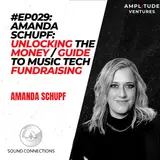
Music tech advisor Amanda Schupf explains why founders misdiagnose problems, what makes a pitch deck work, and why fundraising takes months to close.
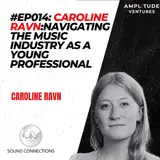
Caroline Ravn, a young music industry professional in Copenhagen, explains why founders stay CEO too long and how young talent gets trapped.
Questions these episodes answer
Why do most people quit learning an instrument like drums in the first year?
Rodrigues says drums are a beginner's market. Upbeat's own numbers show about 20 million active drummers and 10 million new ones starting every year, but 70 to 90 percent abandon the instrument within their first year, so Upbeat measures lifetime value across its whole app suite rather than any single tool's retention.
From: Rethinking Music Education Through AI and Personalized Learning
How is AI changing music education compared to free content on YouTube?
Rodrigues argues online education became content driven and free, like YouTube, which replaced a teacher's material but not a teacher's judgment. AI adds the missing layer, reading how a student feels and recommending the next exercise, the same things a good teacher does, so platforms that only supply content will have to add this layer or lose ground to new competitors.
From: Rethinking Music Education Through AI and Personalized Learning
Why did Upbeat Studio choose to focus on drums instead of piano or guitar?
Piano and guitar make up 70 to 80 percent of the music education market, so Rodrigues chose drums because the niche is comparatively underserved, at only 7 to 8 percent, with roughly 20 million active drummers and 10 million newcomers a year, giving Upbeat room to become a leading player in a smaller market.
From: Rethinking Music Education Through AI and Personalized Learning
Will AI replace human music teachers?
Rodrigues does not think teachers disappear. He expects big platforms to add an AI layer that reads a student's mood and recommends content, closing the gap with a real teacher, while some learners will keep choosing a human teacher they trust, especially one who actually plays the instrument, even as that becomes a more premium option.
From: Rethinking Music Education Through AI and Personalized Learning
What business model could instrument makers use as AI improves?
Rodrigues expects instrument manufacturers to sell hardware cheaply, for example a drum kit, and profit from a subscription that bundles guided lessons and feedback into the kit itself, similar to Nespresso or Peloton. He sees this as a stronger position than a general AI chatbot because the manufacturer already controls the instrument experience.
From: Rethinking Music Education Through AI and Personalized Learning
How do music royalty advances differ from a bank loan?
Sound Royalties gives advances against royalty income rather than lending against credit. It asks for no personal guarantee, no credit history check and no share of future profits, structuring each deal as a fixed payment over a fixed term instead of an equity-like stake.
From: The Business of Turning Music Royalties into Growth Capital
What financial profile qualifies a creator for royalty financing?
A creator needs about $400 a month in royalty income to qualify, and deals scale from small amounts up to eight figures. Underwriting weighs roughly 12 to 14 inputs such as catalog concentration, song age, genre decay curves and who is paying the royalties.
From: The Business of Turning Music Royalties into Growth Capital
Why doesn't Sound Royalties become a label or distributor?
Staying purely in financing keeps the company neutral, so labels, distributors and publishers refer clients because Sound Royalties never competes for their role. It also never takes a share of profits or a right of first refusal, which protects the trust that keeps referrals coming.
From: The Business of Turning Music Royalties into Growth Capital
How does Sound Royalties value future royalty income?
Instead of valuing a catalog like a stock, the company projects income deal by deal, applying decay curves based on genre, song age and whether income comes from one-off sync placements or steady long-term catalog performance, aiming to keep the advance below what a creator could struggle to repay.
From: The Business of Turning Music Royalties into Growth Capital
What is Michael Bizenov's advice for founders building music finance companies?
Start narrow rather than trying to serve everyone. Sound Royalties began working with only two payors, ASCAP and BMI, then grew gradually to more than 250 as it built expertise and reputation, reinvesting knowledge from each deal instead of expanding too fast.
From: The Business of Turning Music Royalties into Growth Capital
Why do creators lose royalties even when their music gets used?
Molinder says every royalty problem he investigated traced back to the same cause: the people who actually created a song were never identified. Once physical formats with printed credits disappeared, nobody recorded who contributed what during the session, so labels, publishers and collecting societies have no way to reconstruct it later, and the money sits unclaimed.
Why did Session decide to be free to use?
Molinder credits his investors Max Martin and Björn Ulvaeus with insisting the entry tier stay free, since a barrier to entry would stop two creators in the same room from collaborating on capturing their credits. Session runs as a freemium product, with paid storage the only tier that costs money.