Guest
Xavier Péters
Xavier Péters is CEO at LeanSquare, as introduced on the show.
Episodes (2)
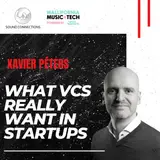
Xavier Péters, CEO of LeanSquare, explains how the fund picks late-seed music tech startups, why team matters most, and why Wallifornia helps validate deals.
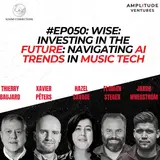
Xavier Péters, Thierry Baujard, Hazel Savage, and Florian Stadler discuss team, timing, and proprietary AI when deciding which music tech startups to back.
Questions these episodes answer
What does LeanSquare look for first in a startup?
Péters says the team comes before everything else, since LeanSquare takes a board seat and becomes a genuine partner, so it would rather back a strong team with a small project than a big market opportunity paired with the wrong founders.
Why did LeanSquare create the Wallifornia conference?
Péters says Wallifornia lets LeanSquare build an ecosystem of startups, corporates and investors around European music tech while learning directly from corporates and artists what the market actually needs, since many pitches he sees do not match real market demand.
How many deals does LeanSquare actually close each year?
The fund reviews roughly 250 to 300 pitch decks a year but closes only five to ten investments, and of those, about a third land in music, with the rest split between sports tech, esports and gaming.
Why is it harder to raise money for music tech than gaming?
Péters says it comes down to fewer specialized investors rather than a smaller opportunity: gaming has a much more open investor market, so a music tech founder has to work harder to find a VC who actually understands the space before signing any agreement.
Why does another investor follow when LeanSquare joins a round?
Because LeanSquare is known in the market as a music and entertainment tech specialist, its participation signals to other investors, who often don't know the space themselves, that the opportunity has already been vetted, making it easier for them to justify joining the round.
What do music tech investors look for in a founder?
Xavier Péters says LeanSquare prioritizes team first, preferring a strong team with a basic project over a great project with a weak team. They also look for product, commercial traction, and achieved milestones.
From: WISE Festival: Investing in the Future: Navigating AI Trends in Music Tech
How important is timing when investing in AI music startups?
Thierry Baujard says timing is always very important, and with AI, too early may be too early and too late is also not very good. Technology also needs room to keep developing.
From: WISE Festival: Investing in the Future: Navigating AI Trends in Music Tech
Do VCs understand AI well enough to invest?
Florian Stadler estimates 90 to 95 percent of VC partners do not understand foundational AI models, which makes investment decisions tough. Generalists fall back on pattern recognition that is still missing in AI.
From: WISE Festival: Investing in the Future: Navigating AI Trends in Music Tech
Should founders pitch themselves as an AI company?
The panelists say no. One warns against claiming AI when there is no MVP; another says calling yourself an AI company will soon sound like a company pitching itself as an internet company 20 years ago.
From: WISE Festival: Investing in the Future: Navigating AI Trends in Music Tech
How much AI due diligence do investors actually use?
Thierry Baujard uses ChatGPT and similar tools to research markets, and Xavier Péters uses AI for data and market understanding. Hazel Savage still relies on her own AI expertise and her co-founder's validation for angel decisions.
From: WISE Festival: Investing in the Future: Navigating AI Trends in Music Tech