SC-023 · Founder
Cultivating Innovative Artist Fandom at Fave
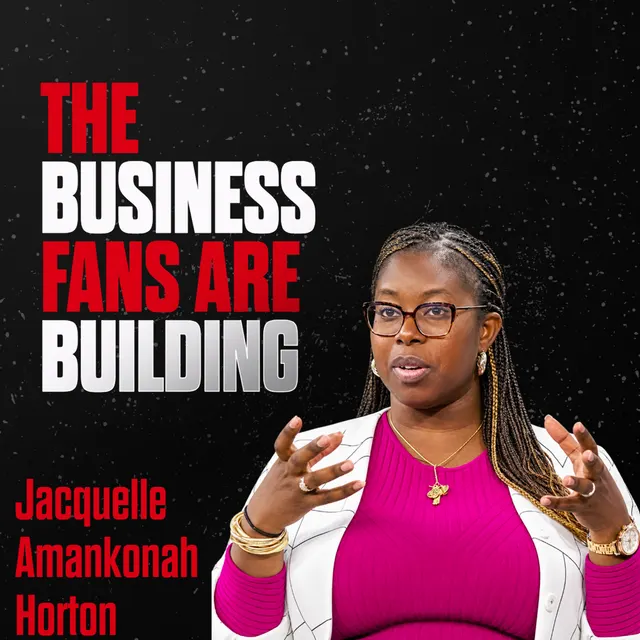
Guest: Jacquelle Horton, Founder of Fave
Summary
Jacquelle Horton, founder of Fave, spent almost eight years at Google, five of them at YouTube, building products for creators and fan communities, after starting her career managing artists and producers and then working in product at BET. She left that coveted role at Google with nothing to fall back on, because she kept meeting the same unsolved problem: fans do enormous, valuable work for artists and get little recognition or means to act on it.
Fave lets superfans document activity beyond streams and likes, things like tattoos, collectibles, merch and referring friends, and turns that into a trusted profile other fans can use to buy, sell and connect safely. Fave recently launched Fan Finder, which lets labels and artist teams see who their most engaged fans are locally and message them directly, something Horton says the industry has lacked for decades. She points to a statistic the industry shares, that around 78% of an artist's revenue sometimes comes from about 6% of fans, without labels knowing who those fans are.
Horton researched the idea herself during the pandemic, interviewing fans directly, then entered and won a startup competition on a podcast host's encouragement before Fave had formally launched, which she says built early momentum. Fave's investors include strategic backers Sony Music, Warner Music, Hybe, Concord Music and Quality Control, alongside Techstars Music and lead venture investor Female Founders Fund. Horton, a parent of young children, says running Fave alongside family life sharpens her focus, since a handful of hours a day forces her to cut anything that will not move the business forward.
As of the episode's release on 18 December 2023.
Key takeaways
- 01Horton spent almost eight years at Google, five of them in product at YouTube, before leaving a secure role with nothing to fall back on to start Fave.
- 02Fave verifies fan activity beyond streams and likes, including tattoos, collectibles and referring friends, turning it into a trusted profile fans use to buy, sell and connect.
- 03Fan Finder lets labels and artist teams see their most engaged local fans and message them directly, a gap Horton says the industry had lived with for decades.
- 04Horton cites a statistic the industry shares, that around 78% of an artist's revenue sometimes comes from about 6% of fans, without labels knowing who those fans are.
- 05She researched the idea herself during the pandemic by interviewing fans directly, then won a startup competition before Fave had formally launched.
- 06Horton says having young children while running Fave sharpens her focus, since limited hours force her to cut anything that will not move the business forward.
Chapters
- Welcome and episode introduction
- Meet Jacquelle Horton, founder of Fave
- A master's in law and philosophy by 20
- Starting out managing artists and producers
- Moving into product at BET
- Eight years at Google, five at YouTube
- Leaving Google to start Fave
- What Fave actually does for fans
- Fan Finder and the 6% of fans
- Parenting while running a startup
Guest
- Jacquelle Horton, Founder at Fave
Questions this episode answers
Why did Jacquelle Horton leave Google to start Fave?
Horton says leaving her senior product role at Google, after nearly eight years there including five at YouTube, was a huge decision because she had nothing to fall back on if Fave failed. She left anyway because she kept meeting the same unsolved problem across her career: fans do enormous work for artists and get almost nothing in return.
What does Fave actually do for music fans?
Fave lets superfans document activity that goes beyond streaming and social posts, things like tattoos, collectibles, referring friends and going to shows, and turns that history into a verified profile. Fans use that profile to buy and sell things like resale tickets and merch with people they can trust, instead of guessing whether a stranger online is really a fan.
Why did Fave launch Fan Finder for labels and artist teams?
Horton says the industry kept asking who its most engaged fans actually are, since labels have told her that sometimes around 78% of an artist's revenue comes from about 6% of fans, without anyone knowing who that 6% is. Fan Finder gives labels and artist teams the same fan activity data that fans already see on Fave, so they can find and message their most engaged local fans directly.
How does being a parent affect Jacquelle Horton's work as a founder?
Horton says having young children while running Fave sharpens her focus rather than working against it, because a handful of usable hours a day forces her to cut anything that will not move the business forward. She rejects the idea that starting a company as a parent is a bad idea, arguing that skills parents build, like negotiating and cleaning up unexpected problems, transfer directly into running a startup.
How did Jacquelle Horton first validate the idea behind Fave?
Before formally launching, Horton spent time during the pandemic doing her own research directly with fans, running interview after interview to understand their real frustrations rather than relying on assumptions from her time in the industry. She later entered a startup competition on a podcast host's encouragement and won it, which she says built early momentum before Fave even existed as a company.
we also have incredible venture partners, Female Founders Fund, who was our lead investor
Topics
- Fan Engagement
- Artist Fandom
- Product Management
- Startup Fundraising
- Founder Parenting
Transcript
Transcribed from the recording by the production team. Names and terms may be misspelled. Every line is timestamped: select a time to play from there.
Read the full transcript
I was just telling my team the other day thatI was the fan who would, you know, like watch a music video and know every movement, likeknew how, like the blink of the hand, I would know all of it. Okay. I was obsessed. Superfans, one of the buzzwords in the musicindustry right now. But weirdly enough, we haven't come very far in the western musicindustry. Fave is a company that's doing something about that. Shaquell is an amazing founder and we get to hear his stories and her perspectives today.
Jacquelle, welcome to Sound Connections podcast.I'm very honored to have you here. Thank you. I've been researching you. You're a very,very interesting person and I'm very excited to jump into that. But first of all, whereare you located? Because you're American, but you are where? Yes, you picked up on myAmerican accent, but I am in Switzerland.
Yes. Okay. I'm in Switzerland right now. AndI guess there's a story behind that we'll sort of dive into. But it's sort of followingthe work and sort of your career. Um, but before, before we sort of dive intoyour career, could, could you just explain me a bit, who are you and what do you do?Oh, wow. That's the big question that I think a lot of us can relate to, to who, who are we? Right. Um, I am Jekyll. Uh, I am an entrepreneur.
I am a founder. I am a mother. I am a visionary. And I am extremely passionate about the domainthat I'm in, which is the fandom space within music and beyond soon. Right? And I'm surewe'll get to all of that. And I would say these identities probably make up the majorityof me, though. I would say me is expanding more and more as I learn. More about the world,more about the business, more about what drives me. So.
The definition is changing all that. Yeah.I'm very intrigued to deep dive into you because as I said at the start of the episode, I'vebeen doing some research and your accolades are amazing. And your career is quite impressive.But there must be like some really interesting stories behind that because that drive thatsort of is, you know, your results show your drive. There must be something behind it.So we sort of, we sort of deep dive into that.
But before we go into a career, being an entrepreneur is not something you just do. What happened while growing up? What was yourmindset while being a child or a young adult that made you lead to this path when you'rein your early 30s and really having some momentum with it? Yeah, I do think that my childhoodand my upbringing had the most to do with why I feel equipped somehow to be crazy enoughto go and be an entrepreneur, I will say.
Growing up, I was told by my parents all the time in every scenario that I cando it. That no matter what, I just try and try and try and I can do it. And they neverallowed me to hesitate or to think that even when, not if, when I will hit a wall, thatthat's the end of it. It's okay, so now you figure out how to get over that wall and thenyou keep going, right? And until you reach your goal. So every challenge, every pitfall,every adversity, I always just saw as a part of the journeyalready. And if anything, and especially as I've been able to crystallize it as I grewolder, I already then had the sense of like,
cool, a no is just narrowing the path of successbecause now I know I won't be distracted over there. I'll just focus on what actually couldstill yield. And I think the kind of crazy notion to say like that is because if theretruly was even make a 1% chance of something happening, Iwould go. I would do it. And my father in particular is the one who just made sure thatI would keep going. And so because of that, seemingly everything would work itself out,right? Because even if it was failure, I would just keep going. And in the end, somethingwould land and I would tell myself, and I
believe it. I wouldn't just tell myself, Iwould believe that everything happens for a reason. So even if I didn't get into that college,that was my dream school, but I ended up here, oh, duh. Of course I was supposed to landhere, duh, right? Now I'm in this entertainment business program that I wouldn't have gottenat NYU, right? Where I was rejected. And I wouldn't have moved to New York because itwas too cold there, not for me, right? All of that was supposed to happen. Or gettinginto my first role or anything, right? I graduated early, like all of these things that were.
Like not supposed to be me, not supposed tobe my path, supposed to be too hard, why would you even try? You're not gonna be the one.I just kept going and no matter how it landed, it seemed to be successful because I wouldsay, this is now the path I'm supposed to be in. And frankly, the past seemed to kindof add up and make sense and I'm living how I want to live, which is great. And so I thinkall of that definitely got me there for sure.
What's the thing that lies behind that? Youknow, this sort of. Jakob Wredstrøm (05:22.522)Oh, this is where I'm supposed to be. Is that optimism? Is it destiny? Is it faith? Likewhat's the driving force between that mindset? Optimism, I would say. I just truly believethat things will land. Things will work out, right? I still believe that. And so no matterhow difficult something is, and trust me, as I've grown, especially now more than ever,I'm very aware. I'm not as ignorant as Bliss, I think, as I was.
I very much know the challenges that are goingto come. I'm aware of them. I can see them faster and more clearly than ever before becauseI've gone through more things than I had perhaps previously. But now I still have that samegene in me, I would say, that allows me to just keep going no matter what and it willend. Well, yeah, that's very interesting.
One of the things that's very... evident to see is that optimism combined withdrive is also what's going forward. You had a master's in law and philosophy by the ageof 20. So I guess there must have been some drive there. Why did you do it that young?What was the process there? Yeah. I think this adds to this optimism because to yourpoint, it wasn't blind optimism. It wasn't, let me just cross my fingers and hope. Itwas, what do I need to do?
to make that happen, okay? It's like, I'mat point A right now, and I wanna get to point B or point C or whatever. So what do I needto do in between to make that happen? And I think that was where, and I think a lotof people pointed out, I would be separated from those who would in fact cross their fingersand hope for the best and get upset if something wasn't handed to them or an opportunity didn'tfall on their lap, right? But instead, and I think a lot of entrepreneurs perhaps feelthis way, of I need to be the one to go get it. So sinceI may not have the degree or the knowledge or the thought process or the experience,how do I figure that out? So in getting that
master's, that was the step that I felt thatI needed in order to unlock the next goal that I wanted. And it may seem a bit incognitoin that because... Obviously I'm in the entertainment and technologybusiness and I've been my whole life, but I randomly have a master's in philosophy andlaw. The reason why is because I wanted that master's so that I could get access to thelaw school. The law school had the courses that I wanted to take. Music law, entertainmentlaw, contracts were the three and criminal law. I was very curious about criminal law,but I particularly wanted access to those classes.
And so that master's gave me access withouthaving to do the laborious, you know, LSATs and, you know, all of these things to getinto law school and wait until I graduated to get into law school because I started thismaster's while I was still doing my bachelor's. And then I was able to take those, those classes,and those are my, my favorite classes and I remember being in those classes, what, like18 years old with all these, you know, 20 something like.
maybe 22 plus at least, law students. Andone of the teachers teaching the music law course was like, this young kid who's in thisclass, how did you even get in here? She's in here and she's doing better than all ofyou. So you need to act like, and I just remember that being a moment of like, okay, maybe Ihave a little knack here, we might have something that somehow I'm grasping this music law thingsmoothly.
Um, so little moments like that where I wouldtry something, it would be the exception. I would be the oddball in the room no matterwhat in every scenario. I'm always the oddball in the room, right? Again, live in Switzerland.Like we can get to that. But, uh, I would somehow always stand out in some way and itwas truly because I would know that I have no other choice but to figure everything out,learn as much as I could.
do the things that needed to get me therebecause I otherwise wouldn't be handed anything, right? And so I needed to do the work. AndI think that's still in me today for sure. What is it about music that you love so much?Do you want to pursue law and music contracts? Very specific niche. Yeah, exactly. And no,I did not become a lawyer. This is a question I want to know yours too, right? Like, whyare we into this?
crazy industry. And for me, it wasn't because,oh, I was in a band and I was younger, or I know how to sing. I don't know how to doany of those things. I'm not a creative. I just somehow, well, recently I've been havingconversations that I am a creative somehow. I just have a different medium than art asa technologist. But I just always wanted to support creatives, those who are making incredibleart and be the brain or the second mind. And I think now those two are melding more thanever because musicians are entrepreneurs by nature now, which is incredible. But I alwayswanted to support that. So I started as like
an artist manager, right? Or managing producersand just wanted to be that business mind. And the music industry, as we know, is stillabsolutely crazy. Like... you know, how mechanical rights work, howcopyright works, like safe harbor, all of these things are like, how did it get likethis? Why is it in place like this? And we're still abiding by these kinds of things, right?Like licensing rule, everything. So I just nerded out about it. I just find it so fascinatingand interesting. Um, and saw no other way.
So no, I did not enter through art and thenjust, let's see how I turn this into career. I knew that I wanted to be on the businessside of music. for a long time that had always been chasingit, right? Yeah, it's interesting. I have a saying that, you know, this is sort of atiny bit provocative is that I like music and I love the music industry. Because becauseof the- That's actually how I feel. It's a good one. Because of the complex nature ofit. And I think, you know, people like you and I who are entrepreneurs by nature, I wouldguess, really gravitate towards problems and complexities and where we can sort of be apart of fixing the puzzle.
And the music industry, more than I would assume many other industries have these complexities, but then it also has this emotional aspect,right? That there's purpose behind it, there's purpose behind the products and the content and the people, maybe more so than other industries as well. Which means that the charge of thecomplexity, but also the purpose of the product, that combination is quite attractive, I wouldsay. Absolutely. The purpose of the product, right? There's no mistake or accident or like...
Jakob Wredstrøm (12:27.374)calmness when you're involving yourself in music. It is an emotionally charged industry,whether you're, no matter what side you are, right? Whether you're the fan, whether you'rethe artist, whether you're the manager, whether you're the lawyer, it is an emotionally chargedthing. It's not a passive thing. And because of that, yeah, we feel more purpose-driven.We feel more like the level of importance, even if it's a song, right? And you couldcompare that to other very important things going on.
It's still something that touches almost everyone.I'm sure there's some people out there that couldn't care less, but there's nearly everyone.And so that level of importance to impact that, keep it going, innovate, change, makeit easier, more efficient is of course empowering. Yeah. Well, we'll get back to the reason whywe need this purpose in music industry, maybe because it's a- to some degree less rewarding than others,but we'll get back to it. Because before we get into entrepreneurship journey, which we'llget really soon, something happened in between you managing producers, studying philosophyand law, and then where you are now, because
you went on a product journey. Yes. Yeah.Yeah, very much so. And I'm still on that product journey. But yeah. So after the managing... I started working for an entrepreneur, a serialentrepreneur. Then I started, so that gave me, not product specific at all, right? Butgave me a sense of building things from scratch.
Then I moved into product when I started workingat BET. And BET was a television, is a television channel. But the majority of the content, at leastwhen I was there, was around music. And so it was exposing me there. It was deep in culture.It was very rich. The people who worked there were so intelligent. And I learned so much when I was there. That gave me my first experiences of, again, building something from scratch,having an idea, a thought that can go from, hmm, wouldn't it be cool if we had fans beable to connect with their favorite artists through a Twitter map, this new site called Twitter,let's have them be able to point on a map
where a fan lives and be able to call themright away and just watch that happen and come to life, build the app experience behindthat, understand the tech that goes into such an experience and then see it come to lifeon 106 and park, right? The music video countdown show was super cool. And so I got addictedto that process and that bug and.
you know, working with developers and readingRFPs and, you know, building things ourselves and did that with a number of the apps there,right? The BT experience, which was the like music festival BT. Now it was when all ofthe TV apps started coming out where you could watch TV on demand. Wow, who would have thoughtCorowinding was where that was? And then.
After there, I said, you know what? I don'tknow if television is in fact the future, maybe, but I have a hunch that this website,youtube.com might be. There's this thing going on there. Let me go see if I could get a role there. If I could get a role there, then excellent. If not, it's okay, I'll stay here. Like I'mdoing well here. They want me to grow here.
But I ended up getting that role. And so this started an eight year, almosteight year journey at Google, where I spent five of those years at YouTube driving producton the creator side, on the fan engagement side, on the community side. And I actuallystarted on the business side, which gave me an incredible lens of problems that creatorswere facing, that artists were facing, the frustrations.
and led me to say, you know what, I actuallywant to impact this. I don't want to just collect this information and then say, well,let me tell you how to work around it, but instead let's go change it in the product.So then I got back to product and have absolutely loved and adored the domain of being an entrepreneur. Right? You are an entrepreneur as a product manager to build, grow, change, disrupt, iterate.I absolutely love the process. That's interesting.
For people who don't understand, you know,how it is building product, can you explain what you mean by it's being an entrepreneur?Yeah. So as a product manager, as a product leader, you are the go-to person for a specificvision coming to life, like an entrepreneur, where the only difference I would say is perhapswhere the inspiration comes from, some product managers.
are given a project that they need to thenbuild and some product managers create it, right? Given again, the problems that theysee going on and in their world from their perspective. Then it depends on the companyof how entrepreneurial or intrapreneurial you can get there. But at least for me atGoogle, you have a lot of space to observe problems and define yourself what needs tobe solved. And so as a product manager, I was I mean, I went through a number of productsthere, right? I was there for a long time, so I had my hands in the monetization andanalytics and the tools and we even explore
short form video back in like 2014, right?Like, we should have just pursued it a bit harder. But you have to understand what somebodyis going through on the other side that you now can solve through technology. So you haveto ask, the hard questions, ask about the frustrations,ask about what is painful within an end user, and for me that was creators, process. Andso I heard a ton from creators about, you know, I can get my video out, but like theupload tool takes forever. Or can I just replace my video? Like I just have one little errorthat I noticed two days later.
and it's ruining everything, can I just replaceit? Or, you know, on and on and on, these kinds of requests that would come in. Anda good product manager won't just take the request and say, cool, let's do a video replacement tool, and instead say, why do you need that? Like, what is going on that you are tryingto solve for? And it's, gosh, you know, I was trying to get this out by the date andI was too quick and then I sped up and I didn't realize this until later. Or, this and that and this and that. And thenother product ideas can be born from that, that underlying problem, right? The abilityto do checks in advance, the ability to watch your video in a preview before it actuallygets rendered or uploaded, right? Like all
of these little steps came from hearing theirfirst request, right? But then again, going back and saying, how do we actually solvewhat's going on? And so as an entrepreneur, as a product leader,you have to be very good at being empathetic, caring about these frustrations and not justbuilding some solution, right? Too quickly, but because it has some fancy technology thatyou're trying to apply, which a lot of people are doing right now, which is frustratingto witness. But you really have to get down to what you actually are solving for and thenthe rest follows. You work with your team, you work with the engineers, the sales team, you work with the supportteam, you work with the marketing team, to
be at the center of this business that youare now starting, this feature that you are putting out there. And you are the only personwho has the kind of 360 view of all of the different inputs as a product leader as well.Right. Just like an entrepreneur, just like a founder. You're the one that everyone'sgoing to with the inputs. You're the one that everyone's picking their brain up and it isyour job to have conviction.
have clarity and to have a strong enough visionand I'd say also North Star, like where is all of this going to guide the wider organizationalong the path to make this feature successful. So replace the word product leader with entrepreneur or CEO, replace the word feature with business or startup or vision. It's literally all thesame thing, which is why I had such a natural, I would say like progression from productleader.
to CEO. And I think at least those who I wasbred by, my mentors, who started also working on these little features and then went onto lead the creation of YouTube apps or Google Photos or now Google Bard, like all of thesethings, I was bred under their wing. And they teach you to be a CEO. That's kind of theirmindset.
And so it wasn't a surprise when I left togo and do something that I was super passionate about that I felt maybe better done outsideof the company. That's amazing. Because when you look at your achievements and accolades,there's always the question like, so how did she get there? Sure, sure. We'll get intoFaye very soon. But one of the things I noticed is, at least if you follow the official timeline,you're You won startup of the year before you reallyhad launched the company and like, it's not like you started the company while you wereat Google. So there's like things going on.
But obviously you must have made some goodnoise because you won Forbes 30 under 30 at the age of 26, which is absolutely amazing.But you're sort of in a place where you're really thriving in a tech career. You're almostlike a CEO as a product manager and really living out the creator thing and It seems like everything is really, reallygood where you are, really aligned with who you are and what you want to do. What madethe change from Google to starting your own company? Yeah, it was a big decision. Definitelya hard contemplation. And especially because,
you know, I didn't come from where I witnessed,right? A lot of... typical profiles of entrepreneurs we're comingfrom where, you know, hey, I'm in, you know, school. I mean, I go to Stanford and I havea roommate that happens to be a super great engineer, you know, or I'm an engineer myselfand I have, you know, something to fall back on if this doesn't quite work out and letme go try this, like, and iterate. And if it doesn't work, cool, I'll go get like aconsulting gig. Like that kind of like step was what I witnessed a lot, right, that waswhat I was exposed to. But that wasn't me at all.
nothing to fall back on. I had, like, if thisdidn't work, like, what would come next? And I had worked so hard to get into that covetedrole at this coveted company. And here I am saying, let me leave. Like, that's insane,right? I knew the rareness, right? The uniqueness of where I had landed.
Right? I'm not, um, I'm super grateful forit. And I'm not unaware of the fact that is a unique position for somebody like me tohave earned. And so it definitely was a huge contemplation, but that should tell you howpassionate I am about the mission of the company, right? For so long, just as I described, we'reobserving problems happening with, um, creators, excuse me, happening with creators, happeningwith audiences, happening with those that just seemed to go unsolved forso long. Both what I witnessed when I was at the company, but also what I witnessedback at BET, back when I was managing artists and producers, back when I was a kid growingup, and I just thought that all of these things
would be solved, right? Like I was a 12 yearold super fan in my bedroom, obsessed with my favorite creator, but didn't have the meansto you know, buy a crazy merchandise or to, youknow, cross my fingers that I could go to the concert if he would come to my hometown.Like I just wasn't in the cards. And so I would instead just like print papers and wastemy parents' ink and print my own like posters, right, or put white out all over my backpackwith symbols or, you know, just do like quizzes with my friends and have them ask me a bunchof things and just like prove my knowledge.
Like that was how I would do it. Or, you know, I was just telling my team the other day thatI was the fan who would, you know, like watch a music video and know every movement, likeknew how, like the blink of the hand, I would know all of it. Okay. I was obsessed, butthe industry got nothing from me. The artists got nothing from me. And so as I got moreand more into the space, I just realized that didn't make sense. That wasn't how it wassupposed to be. Like I'm this.
crazy passionate fan. I'm not alone, eventhough it felt like it back then, right? There was no social media around. And, you know,they got nothing from me. So it just didn't add up. It didn't make sense. Nothing changedover the next decade of that happening. Fans would still be just as obsessed, have morethan ever ways to immerse and find facts and Google and like all of these things. And itwasn't crystallizing into a platform.
into a shared space, into a unscattered worldwhere everything made sense. There was no ecosystem. There was a ton of activity andsome of the most valuable activity that any business or brand would kill for, right, washappening among these super fans, but nobody noticed, cared, knew what to do with it. Youhad a category, nothing, right?
And so I saw that as an opportunity to notonly have fans feel recognized, right. And be seen for this amazing activity that they'redoing, but to give the industry a little bit more rhyme and reason toward these super valuableconsumers that they're just letting go. And the most that they're asking them to do isheart or like or comment. And they can do so much more. Um, and so to your point, yes,I explored the opportunity.
before I left the company because I wantedto make sure that it was valid before I left. This wasn't a cool, let me go, like take twomonths off and then, no. And at this point I had my first kid and I had another kid onthe way. So even more crazy to leave such a comfortable position, right? And no, I didn'ttake maternity leave, all of these things, which I wish I should have, but it just hadto be worth it to me to leave in this situation.
And so. I did some initial research with fans. I dideverything myself, right? Like this was during the COVID days. And so I was moonlighting,you know, having all of these research interviews with fans to again, understand their realproblems. And I approached it from that angle. And that I would say has defined like therest of the company and frankly how I do most things now is just go to the source of wherepeople have not been.
paid enough attention to. A lot of entrepreneurswere looking at artists. I spent a lot of time with artists and creators and knew thatthose problems would be solved well, right? There's plenty of people tackling that. But not a lot of people were looking at fans themselves. And so the information that I received ofthe frustrations, of the potential, of the outcries were just enormous and matched howI remember as a fan, but was in a different world with the way things are today.
And so all of these problems compelled meenough to say, let me see if I can make this real. And then, yeah, like you mentioned thestartup of the year before I even actually launched anything. But that was because Iactually took, I kind of shook myself out of my nerves and said, let me go out to thisstartup competition that I previously was like, no, I'm not gonna be a part of this.
I had just emailed the, and his name is Dimitri.He was also a podcast host. And I listened to his podcast all of the time, got inspired.And he always talked about fandom. And I emailed him one day and I'm so glad I did. I'm surprisedI did, but I did. And I was just like, hey, I'm starting this company about fandom andI just want you to know that it's there. Okay.
And just want you to know. And then he waslike, oh, cool. Like. cool, right? And then he was like, why don'tyou participate in the starter competition? I was like, no, it's just, it's early days.I just have a vision for it. You know, he said, no, just, just participate. I participatedand I ended up winning. Um, and I think it was because, right? I think it was becauseI was just so passionate, so compelled. I just had a very clear vision. I still sayeven some of the things I said on that first public mention of the company to anybody,right?
because it's all still mission oriented. It'sthere in my core. And so yeah, I had that accolade going in, I would say, along withsome of the others. And of course that foundation, along with the experience that I earned atGoogle, the perspective that I had from the deep research that I did before I even formalizedthe company, all led to, I think, what kicked off some good momentum for the company inits early days. Wow.
Well, I think it's about time in the podcastto actually explain what Fave is. I'll probably do an intro before the intro to sort of setthe scene, but could you explain to me what is Fave? Yes, of course. So Fave is this passionate startup that I'm driving forward, all about recognizing fandom. So it's taking the superfanand allowing them to showcase all of the cool activities that they do. Itcaptures the standard ones, the streaming, the listening, the social, all of that's kindof known and captured well. But also the nuances, like if you have a tattoo or if you constantlyare introducing the artist to other people,
right? Or if you have this outstanding merchcollection or collectibles that... you know, would otherwise collect dust inyour room, but you now can show them off to the people who actually care and know thatthat's, you know, one of 50 or one of 20 or whatever. It allows you to meet other peoplewho are like-minded, just like you, who aren't just, you know, one of the two million followersthat the artist has and leaving you to your own devices to like sort through somehow whoto say hi to, but instead captures this activity and uses that in an interesting way say, oh, this person also lives in the areaand has a tattoo and has been to three shows,
right? They're also a concert going, you shouldprobably connect. And so finding these nuances among fans is there. It allows for fans toalso have this kind of trusted base, uh, in a marketplace that we have where fans cansell things to other fans. And so this is maybe twofold. One fans have been and continueto, and will continue likely to take over.
the creation of the most incredible merchthat artists aren't creating themselves, but fans want and find cool. And because it'skind of this like new, or, or a limited production by nature thing, it's kind of like, if youhave it, you're, you're cool. If you know, you know, kind of thing. Right. And so thedesire for this fan made merch is growing, but also there's resale in existing merchandise.There's ticket resale.
And so we realized that not only can we findit interesting to match fans across this, we could also use this as a way for peopleto trust other fans and to look at their profile and say, oh, you've been a fan since 2003.Oh, you were also at that show. Oh, you were a part of this era. Okay. Now I will feela little bit more comfortable buying this, you know, resale ticket from you instead ofyou being one of the scalpers, the scammers, or somebody who created a Twitter accountand their ex account, whatever. And going through...
making some fake posts and then trying toappear like you're a fan. So this kind of base of trust has now allowed fans to seeFave as this safe haven, this place where they can come safely obsessed about theirfavorite artists without the judgment of social media where everyone else, their coworkers,their school friends are living and be able to get verified as a fan through all of theseactivities and have a number of different resources where we're repurposing all of this.
to make it useful for fans to do the thingsthat they're wanting to do and to participate in commerce and to make a living from beinga fan. All of this is our bread and butter. I'll say what we have now extended Fave tobe is to be just as interesting to the artists teams as it is to the fans because, you know,as again, we started, we'll continue always to be fan first, fan driven, right? Like everything we do is driven by the energy of the fans.
Um, and, and fan facing, right. But we alsorealized that there was a lot of curiosity by the industry to say, okay, who are thesefans in there? Right. You have, you know, the, the fans who have been around for thelast decade, who are racking up, like mentioning that they're doing all of these activitiesthat they're intruding me to everyone that they, you know, have memorized all of theselyrics. You have these fans, who are they?
And this unlocked a whole new suite of problemsand frustrations within the industry, where people have said to me, the biggest questionwe're trying to answer right now is who is listening to ex-artist, right? Name your artist,who is listening? Who are they, right? Or who are the people who are buying, I wouldsay, spending the majority of the revenue, sometimeswe get stats around 78% of the revenue, was done by 6% of my fans. Who is that 6%? I don'tknow. Yeah. Right? And so these questions keep coming up, yet we have this valuableconsumer set on our platform, engaging with
each other. And so we just recently announcedthe launch of Fan Finder, which is the ability for... the industry to be able to see in their kindof admin corporate way, the same information that fans are sharing with each other, thesame activities, the same, I'd say, interest and personas, right? And making it usefulfor the industry so that they can say, you know, who are my most influential fans inParis, right? And are they going to the upcoming show? Or who are the fan artists who, youknow, have never purchased a piece of merch?
But are you know constantly engaging especiallyin the last 30 days right and you can find these fans You can find a specific fan youcan get information per fan You can find groups of fans and you can also message them directlyright which is another thing that has been very frustrating where the industry has beenconstantly under the mercy I would say at the mercy of algorithms only showing theirposts to like 2% of followers right or like the DM rules don't allow them to reach out to the fanswho would love to hear from them, but they just can't get to them. And so we've madeit much easier to highlight the incredible stories of these fans, allow them to engagewith each other, participate in, in commerce
in a much more meaningful way and allow theindustry to answer the many questions that they have been trying to for, for decades. That's great. That's so interesting. And I'vebeen lucky enough to browse around on the app and check it out. It's really, reallynice. And I believe personally that fan engagement is one of the things that the music industryis really going to focus on the next couple of years, especially with the purpose of growingthe pie in the music industry and sort of accessing revenue they have overlooked forway too long. Absolutely. One of the things that I have found especially interesting when looking into you and the company is your relationship with your investors.
Because there's a story, there's a narrativethere that's quite interesting. Before we go into the specifics of fundraising money,which I think is really interesting because as far as I could tell you, you've fundraisedaround $4.2 million over the span of three years. Fundraising money in itself is difficult,especially in this market, but in the music industry there's a lot of difficult aspects.But you're an investor list. Could you go through who has invested in your company andhelp the podcast listeners understand who they are? Because I believe that is quiteunique.
Nice. Great. Yes. Very grateful for my investors.Okay. So we have a lot of the strategic investors. So we have Sony Music, one of the biggestlabels, Warner Music, one of the biggest labels, Hybe, one of the biggest labels there. Theyhave BTS, now Justin Bieber, Ariana Grande, et cetera, under them. We have Concord Music, which is the biggest independentmusic label. Quality Control, which is the biggest hip hop label. We have Techstars Music,which we are a part of as well. And I think
that's everyone on the strategic side. Thenwe also have incredible venture partners, Female Founders Fund, who was our lead investor,who has been amazing. Beta Works, which are these product-driven folks who have taughtme a ton. Right. And who am I missing? Oh, of course.So we have some folks from the new round.
That was all from the first round of the game,right? And in the second round, we have the ex-Googler's fund, Zoogler fund. This is afund that invests in some entrepreneurs that are part of this community that has unfortunatelygrown but cool. It's grown a ton of a lot of ex-Googlers.
But they invest in a few and I'm super gladthat they chose Fave as a company that they believed in deeply to invest in themselves.We have Leora Cohen who is a vet in the space, former everything. He headed up Def Jam, headedup Warner, and now heads up YouTube Music.
And it has been amazing. We have... We have Goodwater, we have Gainesville's,we have likely forgetting some, but definitely a very cool list of investors to go throughthat mean the world. I will say, to your point, it wasn't an accident that it was like thiscurated list. It mattered a lot to me who was a part of this company because I knew that it wasn't even in the foresight backthen, right? Like when I was raising just after the startup of the year moment, right?So it's still just like off of a vision, was
putting together the first prototypes, right?But they all kind of felt the weight here. I wanted folks who would be value added. Iwanted folks who weren't just like green, right? Who was just giving a check and wouldleave, but rather people who I could. really align with. And I'd say maybe one whodeserves a special call out is a great example of that, Alexandra Moore. At the time sheinvested, I think she was an exec at Amazon.
She went on to do a couple other things, leada couple other very well-known funds, and is now at Empire. And she's just one of thosefolks that you can hit up at any moment, any time, with the craziest business problem.And she has either been through it, knows the perspective, gives you the real,right? And you just like a text away, right?
I in fact need to text her back. Like, sojust having, and I can do that with anyone at Warner, at Sony, right? And these folksare not just passive and like update us later, rather it's truly, and you know, investingin the growth of faith, which is very able to see. And so some of them have, you know, been able to convert to partners, which isexcellent. We have a bunch of exciting initiatives that maybe I can come back to talk much moreabout. And we've learned a ton from them.
So it's been a really healthy relationship,as healthy as it can be with the craziness of the music industry, right? Yeah. But it'sbeen cool to work with, especially a few of these investors and push forward in partnership.Yeah. Well, I sort of asked you to list investors on purpose because he... It's hard to, let's call it compliment yourself,but it speaks for itself that industry really recognizes the problem, also recognize thatyou might be a person that can lead some efforts into it. What I thought was especially interestingin your invest list, at least from my perspective, is hype. Because I believe this fan engagementis some of the things they've been really,
really good at. Has that been a part of yourprocess looking towards Korea and how they sort of... have their fan engagement and how we can implementit into a more Westernized society. Yes, of course. And before I answer that, I forgotanother address is not many. Shiva, he's been so amazing. He has had this incredible careerat Spotify, at YouTube, at Uber, right? Like CTO, VP, event, all of these things. And heis also one of those. You email him, you would think he's like super busy now. He's leadingOpenSea.
It's like he should be busy, but he will answeryou with anything that you need anytime with such enthusiasm. So I'm very grateful forthe angels who have also invested. Um, so yes, a hundred percent, uh, looking to theEast has been, um, and especially at the formation of Fave, a huge inspiration, right? They havethings figured out that we are just starting to get a inkling about just a little ideaand they have full businesses around it, right?
I remember watching a lot of content actuallyfrom Connie Chan, who is an investor at Andreessen Horowitz, and would quote her in my deck becauseshe would share things and different scenarios and business models. For example, a lot ofthings also from China, right? She would share things like, hey, we have monetization perpage of a book. Somebody isn't buying a book.
They're buying... uh, you know, words, right. And you, as themore you read, the more you pay, right. Or you get like two thirds of the book free andthen you find like things like that were so fascinating to me to just think different,right. Or, you know, welcoming people into a space where they can all listen to musictogether and it's like a, you know, cafe or obviously so much that they have done aroundfandom of, you know, purchasing, um, uh, kind of micro.
not prizes, but just like micro pieces ofcontent that are beyond the music itself. So that there again is an ecosystem aroundthis world that these artists have worked so hard to create. The music is one thing,the art is one thing, but they have also spread a set of values that so many people have beeninspired by and there could be derivative works off of it. And I'd say what's...
is so fascinating about the East is they understand that, they embrace this world and they truly allow fans to participate in it. They don'tshy away from it. There seems to be a bit less of a, let's have a division up betweenfans or let's, even if it's just for the mystique alone or because you don't really understandhow to engage them or they're gonna run up on you or hug you or kiss you. Right, it'slike, it's more, let's embrace the fact that you are the reason why we are able to continuethis going.
Yeah. And I think that definitely played alot into how we were thinking about the model and the potential of the model from the start.Yeah, for sure. It's so interesting because one thing is monetization, right? Becausethe odds is to work hard for it and the music industry are not ceasing the opportunity.But also to your point, the fans want this, right? For me...
I'm not a super fan of anyone per se, butI look to my dad and all, actually. He's turning 65, but he has one band that he travels theworld to see. He's been at the concerts 30 times. He travels, he writes the biographiesfor them, all the notes and the CDs and LPs, because that's his passion. It's not abouthow much money he throws about it. That is what he wants to do. And when we don't monetizethat and when we don't create...
platforms around it, the fans are missingout of that opportunity. In fact, so what I think is amazing about fan engagement rightnow and in our side of the world is that it's a win-win, right? Yeah. Everyone is winning.The assets are winning, the industry is winning, the fan is winning. So honestly, I just findit weird why we have an industry have not pursued it more actively. And you're makinga good step towards it. But I still feel like...
people are just waking up to it, as you said,like we're just getting the inkling of it. Why do you believe that is so, that we'reso slow getting into this? Yeah, I get asked this one a lot and I don't have a good answer.I don't know. I don't know why we are so slow, because it's clear, it's very clear and it'sbeen clear for a long time, how best to work within this space, right? And I think nowthere was like a recent article around like, People are now just catching up to like whatJekyll has been saying for a long time. Right.
And it's like, I have seen these, these models.I've thought about these models as a fan myself, a ton of fans have thought about these modelsand whether or not they have the means to become an entrepreneur, to do something aboutit, right. Is one thing, but it's been clear and the industry in the U S unfortunately has operated, I understand why, but very conservatively.
Um, uh, It's scared to innovate, right? They've beenburned a lot of times by technology over and over and again, and they continue to be. Sothey, you know, rather than feeling like they could get ahead of it or control it or beon the forefront or have it work with them, again, those nerdy laws that we have been,you know, obsessing over for our careers, right? They have had to, you know, push itaway or not want to embrace what, like, yes, that could.
bring us a bunch more revenue, but I don'tknow if it will, so let's not do it. That's the sentiment that I witnessed being a partof the industry before I even started as an entrepreneur. And definitely when I startedas an entrepreneur, I would have countless meetings of people being so excited aboutthis. But when push came to shove, at the end of the day, it was their neck on the lineif they embraced this new model or not. And it would seem sometimes too risky to justgo forward.
And it would be not just me, it would be allof the founders in music, you know, that I can connect with. It was always some very,something that made so much sense, but was a little bit of a different model, a differentapproach that would require some change or some approval from management. And it seemed,unfortunately, like a lot of people just didn't have the power that they wish that they couldhave in order to push something forward. And then who did, right? And so unfortunately,I think the industry is still in that mode.
They're waking up to a lot of these opportunities,sometimes too late because now everyone's into it. So now the concern isn't about howto innovate best, it's just how to win against other people who also realized it at the sametime as you. But yeah, it's a tough question to answer because I'm just one of those whothink like, why can't we do it? And so it's hard for me to answer the questions of likewhy we haven't. That makes sense.
But that also speaks to the power of entrepreneurship and how important it is, especially in the industry like ours that has been burned afew times and seems quite conservative in nature at times. One of the things, when Ilook through your LinkedIn, right? There's a lot of things, and there's a footnote of something that I think is really, really interesting that it's not mentioned many places. GlobalMIC. Yeah, yeah. What is that? Can you explain it to me? Because that stood out to me. Eventhough I can't find much better.
That's great. I should probably maybe takethat off. But what it is it's like it's bad. I was completely restless during the maternityleave of my first daughter of my first daughter. And I like you, I shouldn't have been likenow that I have these two kids, I'm like, why didn't I just stay put and just enjoyher smiling face? But I enjoyed her smiling face. And when she would sleep, I would belike, babe, what can I do? Like, I want to do something.
So I started Global Mic, which was, and actuallymaybe I shouldn't take it down because I should do this. It was a collective of music entrepreneurs and music industries, those who you have as guests on this podcast to come together andtalk about some topics within the industry that don't get a lot of love, that don't geta lot of discussion, that I wanted to facilitate these kinds of conversations and forums sothat we can make more progress in the industry.
I actually met through starting that, some of the folks whoended up introducing me to the people who invested in Fave, which is awesome. So itended up kind of working, but that's what it was. That's what it started. Once I wentback to work, it kind of calmed a little bit, but that's where it was born. No pun intended.And the reason why I think it's interesting is now you mentioned yourself, right? Youstarted this, you met some people, then introduced you to investors, right?
Because in the music industry, getting totake the first steps towards the right network, towards the right understanding is difficult. And that's why I thought it very, very interesting. And I also thought it interesting that itwasn't, didn't really exist anymore. Because the- No, but that's what I'm saying I should,because to your point, it is very difficult to navigate this industry and this space.And even though I say, oh, I, you know, came from it, whatever, I- I came from the entertainment world, not necessarily the music industry. I wanted to be in the music industry and I worked for a bit at Universal.
And again, I worked at the TV network that did music, but I hadn't yet had a proper role at a place where I was making a ton of connections. So I did in fact come into this entrepreneurialjourney without any connections off in this foreign country, right? Like where. I had to just make things fresh. And so thatwas one goal of mine, because I'd started that while I was over here as well, to say,how do I just get connections? Like, if I can't be rubbing shoulders left and right,how do I get them? Let me be the curator, the person to at least start this. And thenit worked, right? And I see that very much still today. You have to, just like we talkedabout in the beginning, understand the gap
that you have. and figure out your way that you're goingto patch that together. And that was that for me. I'm going to be the one who you haveto be connected with in order to make connections with, right? And I think that formula justapplies to everything I do. It's interesting. Switzerland. Right? How in the world? Becauseyou said you were there and how do you suddenly get introduced to the music industry? Becausewhen you started, have you been in Switzerland the whole time you've done Faith?
Yeah. Yes. And that's the impressive thing,right? You know, I don't know Switzerland that well, but I definitely know that it'snot the mecca of music industry. Not. Um. It's not. Yeah, I mean, I think I, thankfully,but also it's very sad that this is the reason, but because of COVID and people getting comfortable with, you know, taking meetings over VC, over video call, I'd say was likely a big key for me to beable to build this company, staff this company, fund this company from this chair, right?Because I was able to make the connections
and the relationships with people in a waythat they previously would say, oh, fly out, come see us, right? Where are you down inLA? Yeah, come up to the Bay. Let's, you know, take a walk and try to see if we get thisdeal done. And that was how it was maybe a few months before I started raising, grateful enough to be able to have a meetingwith Korea, with the Pacific or with the West Coast, with the East Coast, with someone inEurope, with my team, right? Like all within a three hour back-to-back block and then procurethese things. And so I would work with my team during the day and then set aside somehours at night to take meetings with the West
Coast and with Asia. And so... That was how I got it done. The time whereit was crazy. I still have night meetings tonight, tomorrow. I still have night meetings,but definitely back then it was every single day till like 3 AM. And that kind of grindand hustle, I think is just, I mean. Like, I wish you didn't have to have some bit ofthat, but I also, right? Like, I wish you could just do normal hours, nine to five,like getting it done, but.
Sometimes the passion within you just doesn'tallow for you to sit and rest and wait. All right. You're just eager. Like for me, itwas, I want to have that meeting tomorrow though. So like, yeah, I'll stay up. I'm notgoing to wait until you have availability at 8 a.m. your time and then 6 p.m. my time,right. Or 5 p.m. my time. I want to have it. So like I'll meet with you at your 3 p.m.and my bit night. So yeah, I mean, I think that was why.
Circling back to actually where we startedour conversation off camera, I had a kid a week ago. I have three kids now and you havetwo kids. And last week, I'm sort of getting quite active on LinkedIn. I wrote a post aboutthe contemplation about being an entrepreneur and having family and how to prioritize andhow to sacrifice. What's your thought process about being this hungry, ambitious entrepreneurand balancing with having kids?
Yeah, I mean, this is very important to mebecause I will say I'm not, um, you know, I'm, I'm not the entrepreneur that just aswe said, didn't have a lot to fall back on. I don't have like family here to send my kidto watch them even for like an hour meeting, right? It's like me and my husband tryingto make it work him, you know, take, taking the baby for a little bit and calming theolder one who woke up. It's, it's a lot of that. Um, I really see it as one of those things thatthis is why the family, the kids are why I'm
doing this in the first place. Because I wantto be able to build a life, a lifestyle, a foundation for them to be able to do whateverit is that they want to do. I don't want them to feel like they have to be forced into doingsomething that they aren't passionate about. Um, and so I would say that my family is thereason why I'm driven to do this. The process of course is very hard. Right. Um, I'm constantlyfeeling like I'm giving a little bit to my business and a little bit to my family andnone of them are getting a hundred percent.
Right. Um, but in reality, it may not be that,right? Like I'm fully focused here with you now. Um, of course. Right. But sometimes itjust feels like, um, you know, should I instead be over there? Or should I be. cleaning the house or doing laundry, thingslike this. But I would say that's a feeling, but the reality is it makes you far more effectiveas a parent when you are also an entrepreneur because you know that you don't have endlesstime. You don't have 19 hours a day to get everything under the sun done. You have ablock of time and then you gotta go pick up the kid from kindergarten. Then you gottatake them to gymnastics and then you gotta,
yes, this is my later, right? But you know that within this five hours thatI have right now that's focused, I have to get the most important thing done, the mostneedle moving thing that's going to make the biggest impact to my business and I don'thave time for the fluff. And so that kind of diligence and, um, precision, I would sayhas made me a far better entrepreneur because I know how to categorize and prioritize differentopportunities based on how much of an impact I think that they're going to bring.
And I try as much as I can not to spend mytime now more than ever on things that I see are like would be cool, but they're not goingto move the needle at all. So why would I do that when instead I could be doing thisother thing, right? For my family. Um, so it's made me a far better entrepreneur. Uh,it has made me a guilty entrepreneur for sure. Right. But I think I remind myself all ofthe time that the reason I'm doing this, the reason I have my, you know, baby sitting nextto me while I'm in this meeting or, uh, you know, having my kid pop up in the background withoutapologizing, but somebody may be uncomfortable about it, whatever, is because I'm doing thisfor them, I'm doing this for anybody who feels
that they can't or shouldn't, or it's notgood, right, to start a company as a parent, I think that's very silly. And I think thatthe traits that you get as a parent, right, knowing how to convert like a yes, a no toa yes. how to negotiate, right? How to like cleanup a bunch of unknown like mess, right? Like all of these kinds of things that you haveto do as a parent, you find yourself needing to do as an entrepreneur and you have muchmore experience if you come in with that angle.
I absolutely love that answer. Thank you somuch. I needed to hear that. We'll be sort of coming to the end of the episode. One ofthe things that I like to ask, people on the podcast is, do you have anyadvice for entrepreneurs going into the music industry? What do they need to know? Whatdo you have of experiences that we'd like to bring to them? Yeah, it's wrapped up in,I think, everything I'd say, right? So starting from the beginning, the persistence, the diligencethat you need as an entrepreneur in any industry, don't lose that. Don't take it for granted.Don't let people try to tell you that you're doing too much.
or that you're being too ambitious, ugh, oryou're starting too young, or you're, you know, why don't you just take the easy route,right? Try not to listen to that as much as you can. Some of it could be valid advice,and timing is one thing, right? Like again, I didn't start this company when I was 20,when I was, you know, as ambitious as I probably ever was, right? Maybe not, maybe I'm morenow. But I waited until I was in. When did I start this company? I don't know.
just like a few years ago when I had thisfoundation, when I had at least a little bit of something, when I had a ton of experienceto do that, but I knew that this was in my cards. And so I was preparing for this momentfor a long time. And so having that mindset and not letting anybody tell you any differentor to slow down or to just pause for a second, I think is one thing to keep in mind. I'dsay the other is the navigation of the industry itself, right? I do think it helps to, understand the foundation of how the industryworks before you jump into it. I think I see a lot of entrepreneurs fail when they comefrom the left and they don't really know how
the industry works. And that's a quick, I'msure nowadays, it's a quick video on YouTube, like Music Industry 101 instead of years inschool, right? And so that I think will serve very well. And I would also say kind of just what I saidat the end here. Unfortunately, there is a lot of ambition when you talk to people inthe music industry, but very little action.
And you have to get very good at distinguishingwhat is a conversation that will actually move your business goals, your business goals,not theirs, not someone else's, not the thing that they think your business is. your business goals forward. And you haveto ruthlessly find those, like I named on my list, like all of these things, right?Those who are going to partner with you, those who will partner with you for very value addcontributions. Otherwise you are wasting your time. You'll gain a lot of experience. It'llbe fun, right? You'll be in a cool domain that everyone knows about and find sexy, butit is not worth it to be in this industry at all. I will tell you a hundred percent,I'm sure you're gonna create Jacob.
It's not worth it to be in the industry unlessyou have this dying burning passion that you cannot set aside and that you don't want anyoneelse to tell you to ignore. And if you, you know, and it won't come to life unless youget really good at distinguishing the like fluff from the reality. Man, that was somebeautiful advice. I've loved this podcast so far and now it's coming to an end. Butthank you so much for participating.
I'm very intrigued about Fave and I'm lookingvery much forward to follow it. Thank you for your time. Thank you. Thank you for sharing.Thank you for being honest and open. I think we need more entrepreneurs in the music industrytelling their story, but the real story, not just the music business worldwide article,the actual real story. And thank you for doing that.
Of course. And I appreciate it. And thankyou for asking and caring about these things, because I think these kinds of foundationalmindset, like conversations about how you actually can build are far more valuable thanlike, let's walk through the product sometimes. Right? It's like, how did you even do this?So I appreciate you being this, uh, this voice, um, uh, and this way that other people could hear other voices so that they can do it themselves.
So that's, this is awesome. Thanks for havingme. Love it. Thank you so much and I hope to see you soon.Yeah.