Topic
Global Music Markets
Music markets outside Europe and North America: Africa, India, Latin America, China and other emerging markets. 17 conversations with founders, investors and experts, newest first.
Episodes (17)

Yoel Kenan, founder of Africori, explains why African music consumption is high but revenue stays low, and where catalog and export investment should go next.

Vijay Basrur, founder of OKListen, explains how he bootstrapped an independent Indian music platform for over a decade before its acquisition by AWAL.

John Lister, Head of Community at Rap Fame, explains why the app's mostly-artist audience rates, mentors and pays to promote each other's music.

Faraan Irfan, founder and CEO of Saarey Music, explains how a 25-year exclusive license built a profitable streaming app for South Asian classical music.
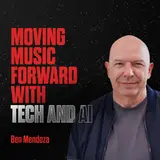
Ben Mendoza, CEO of Beatchain, explains how AI quality control, local payment systems and white-label partners help independent artists get discovered and paid.

Mag Rodriguez, founder and CEO of EVEN, explains how the platform lets artists sell music directly to fans before release, using pay-what-you-want pricing.

Hans Peter Roth, co-owner of Muserk, explains how the rights administrator recovers unclaimed publishing royalties and scaled to more than 20 million works.

Audiomack's Gineyda Cornelio, Director of Marketing and Latin Strategy, on Latin music's 19% listener growth, curator discovery, and independent artists' rise.
 1 h 8 min
John Samuel Gerhart and Chris Santillo share how they went from LA's grind to signing with Simon Cowell and founding the artist-centric label Lightworks.
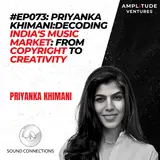
Entertainment lawyer Priyanka Khimani of Khimani & Associates explains India's independent music ecosystem, copyright legacy and market entry for founders.

Dr. Tom Fritz of Jymmin explains how agency, cross-cultural music making, and human connection can keep live music relevant as AI grows.

Neuroscientist Tom Fritz of the Max Planck Institute explains why the brain treats AI and human music alike, and why listeners still crave live performance.
AI Jake from Sound Connections summarizes the 2024 Luminate Midyear Music Report: streaming growth, indie gains, vinyl demand, and live music's local impact.
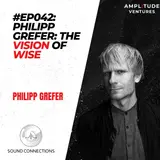
WISE founder Philipp Grefer on bringing German and Chinese music scenes together since 2007, and this year's conference debate over AI-generated music.

Sania Haq, founder of Brighter Stereotypes, explains why South Asian artists remain underrepresented despite a growing global audience.

Christiana Sudano, founder of Do Less Management, explains how she connects Nordic artists to LA and Nashville and why managers now handle artist development.

Stein Bjelland, chair of Music Norway, explains why artists must understand markets and how Norway could fund music firms without buying equity.
Questions these episodes answer
Why does African music generate so little revenue despite huge consumption?
Kenan says consumption across Sub-Saharan Africa is high but monetization lags badly. He forecast a billion-dollar recording market by 2017; thirteen years later it sits at about $110 million, held back by low-paying advertising-based streaming, weak telecom-linked subscriptions and unresolved rights splits.
From: Exporting African Music: Rights, Revenue, and Global Growth
Why is buying an African music catalog risky?
Catalog buyers face missing contracts, falsified reports and people who surface years later claiming ownership of recordings made decades earlier. Kenan says he was once given a falsified report and has faced rights disputes on other deals, so he now avoids catalogs whose sellers cannot produce paperwork.
From: Exporting African Music: Rights, Revenue, and Global Growth
Why haven't telecom companies succeeded with their own music platforms?
Telcos control payment and data bundles and have tried repeatedly to launch their own streaming products, but Kenan says none has managed to build a lasting music platform of its own, since users keep gravitating to YouTube and Spotify instead of a carrier's app.
From: Exporting African Music: Rights, Revenue, and Global Growth
Where would an investor get the best long-term return in African music?
Kenan would split money across catalogs whose audiences have not yet moved to streaming, such as gospel music, artists and songs with genuine export potential, and better marketing and data tools for the wider ecosystem, expecting returns only on a ten-to-fifteen-year horizon.
From: Exporting African Music: Rights, Revenue, and Global Growth
How did Vijay Basrur come up with the idea for OKListen?
He wanted to buy music from an independent band he discovered called Them Clones and realized there was no digital way to buy Indian independent music. After the CD he ordered by post missed a home delivery, he researched the market, found nobody was selling independent Indian music digitally, and decided to build the platform himself.
From: Building a Music Tech Company Before the Market Was Ready
Why did investors decline to fund OKListen in its early years?
Venture capitalists told Basrur and his co-founder that independent music was too niche a market to reach real scale, and suggested they pivot toward Bollywood or broader commercial music instead. Basrur and his co-founder were not excited by that advice and chose to stay away from it, so the company went unfunded.
From: Building a Music Tech Company Before the Market Was Ready
How did Vijay Basrur keep OKListen alive while working full-time corporate jobs?
After failing to raise capital, artists urged him to keep the platform alive, so from 2014 to 2019 he held a day job while his co-founder returned to a family business, and he hired a junior employee to keep OKListen running day to day as the business slowly kept growing.
From: Building a Music Tech Company Before the Market Was Ready
How did competition from TuneCore and CD Baby affect OKListen during its acquisition talks with Sony?
While Sony's deliberations dragged on for roughly a year and a half, TuneCore and CD Baby both expanded into India and started taking business from OKListen. Basrur says he could not invest to compete because the company was in the middle of sensitive acquisition talks, so he told Sony's team about the slipping numbers and they agreed not to walk away over it.
From: Building a Music Tech Company Before the Market Was Ready
What role did Vijay Basrur take on after AWAL acquired OKListen?
He committed to stay on for about a year but ended up staying roughly eighteen months, becoming head of India and South Asia. Much of that time went into merging OKListen's finances into AWAL's systems and deciding which independent artists on OKListen's long roster should migrate onto AWAL.
From: Building a Music Tech Company Before the Market Was Ready
Why do people invest more in themselves after winning small prizes on Rap Fame?
Lister says winning even a modest prize like fifty dollars makes people feel invested in, which in turn makes them invest more in themselves, often putting winnings toward gear like a microphone that keeps them creating and improving.
Why do rap fans value authenticity over polished production?
Lister says rap's culture rewards real self-expression, so listeners prefer a raw freestyle recorded on a phone over something heavily produced and corrected, unlike genres built around selling a catchy narrative.
How does Rap Fame's Judge for Judge system help new artists improve?
Users can join crews of up to twenty people who give feedback, and Judge for Judge sessions match two artists to rate each other's songs live on delivery and impression, helping newcomers get noticed and learn what to improve.