Topic
Streaming and DSPs
The economics of streaming services, their algorithms, payouts and the fight against streaming fraud. 36 conversations with founders, investors and experts, newest first.
Episodes (36)
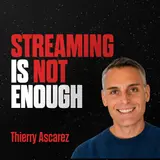
Thierry Ascarez, Chief Business Officer at Winamp, explains why streaming rarely pays independent artists and how Winamp for Creators fills the gap.
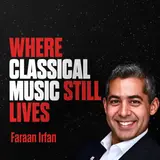
Faraan Irfan, founder and CEO of Saarey Music, explains how a 25-year exclusive license built a profitable streaming app for South Asian classical music.
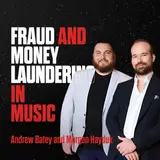
Beatdapp co-founders Andrew Batey and Morgan Hayduk explain how streaming royalty fraud and money laundering work, and how AI music changed the game.

Simon M. Eder, co-founder of Primephonic, explains how solving classical music's metadata problem led Apple to acquire his startup as Apple Music Classical.
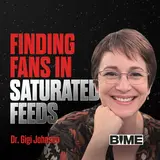
Gigi Johnson of Rethink Next explains how algorithms, AI overviews and glut are reshaping music discovery, and how artists can build direct fan relationships.

Jesse Flores of Intercept Music explains how independent artists should pick a distributor, budget for ads and keep ownership of their masters.

Amplitude Ventures' Jakob Wredstrøm and Taj argue music tech investing has no real supporting data, few active angels, and mostly weak exits below $50 million.

Darryl Ballantyne, founder and CEO of LyricFind, explains the antitrust suit against Musixmatch and why the exclusive Warner deal threatens artists.

Sleeve founder Anna Lidell explains why streaming pays artists too little and how a small paying fanbase can earn a musician more than thousands of streams.

Aurélien Hérault, Chief Innovation Officer at Deezer, explains why Deezer detects but won't recommend AI-generated tracks on its platform.

Audiomack's Gineyda Cornelio, Director of Marketing and Latin Strategy, on Latin music's 19% listener growth, curator discovery, and independent artists' rise.
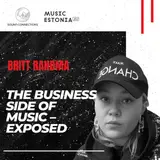
Britt Randma of Main Character Agency explains the real financial cost of exporting music from Estonia, from US touring visas to alternative fan monetization.

Daniel Nordgård, professor of music industry management, explains why he is optimistic about streaming, AI generated music and artist careers.

Dan Fowler explains why streaming growth masks a real plateau, why consolidation is squeezing music tech, and where opportunity still exists.
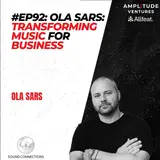
Ola Sars, founder of Soundtrack, explains why businesses pay fifty dollars for a music subscription and how the company started as a Spotify joint venture.
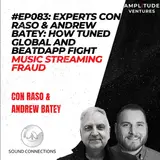
Con Raso of Tuned Global and Andrew Batey, founder of Beatdapp, explain how machine learning catches music streaming fraud and why it pays real artists more.

AI Jake explains how Warner Music Group grew streaming revenue 10.2% in Q2 2024 through major hits and strong digital partnerships while rivals slowed.
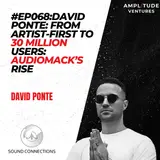
David Ponte, co-founder and CMO of Audiomack, on building an artist-first platform with 33 and a half million users through discovery and direct fan tools.

AI Jake explains the Spotify vs. MLC bundled royalties dispute and estimates a $46 million potential payout for US songwriters.

AI Jake on Sound Connections explains Will Page's completion model for music royalties: reward completed streams, curb fraud, and support fairer payouts.
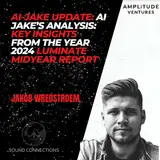
AI Jake from Sound Connections summarizes the 2024 Luminate Midyear Music Report: streaming growth, indie gains, vinyl demand, and live music's local impact.

AI Jake reports on Blackstone's $1.5 billion acquisition of Hipgnosis Songs Fund, covering 40,000 songs and a $2.2 billion enterprise value.

AI Jake reports on Sony Music's advanced talks to buy Queen's catalog for a reported $1 billion, covering music, merchandising, logos and publishing.
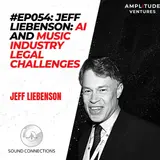
Entertainment lawyer Jeff Liebenson, President of the International Association of Entertainment Lawyers, discusses AI training, fair use and music licensing.
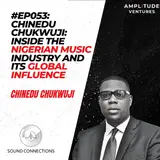
Dr. Chinedu Chukwuji of Purple Blue Academy of Music Business on local content rules, streaming, and diaspora listeners that took Nigerian music global.
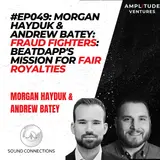
Morgan Hayduk and Andrew Batey, co-founders of Beatdapp, explain how they built streaming fraud detection and raised a $17 million Series A.

AI host AI Jake reports on Tencent Music's AI predictive model, subscription growth to 106.7 million paid users, and the legal risks of AI in music.
Hazel Savage, VP of Music Intelligence at SoundCloud and former Musiio CEO, explains how she built an AI music-tagging startup and sold it to SoundCloud.

Sania Haq, founder of Brighter Stereotypes, explains why South Asian artists remain underrepresented despite a growing global audience.

Agnes Chung, co-founder of Musicube, on building AI-driven music search in Hamburg and why the startup chose to be acquired by Songtradr.
AI Jake reports independent artists and labels earned $4.5 billion from Spotify in 2023, half of its payouts and four times their 2017 earnings.

Michael Pelczynski of VoiceSwap, formerly of SoundCloud, explains the user-centric royalty model, the Lil Uzi Vert fan stat, and AI voice licensing.
Mogul founder Jeff Ponchick, who sold Repost to SoundCloud, on why no artist he interviewed felt confident they were paid in full, and how Mogul fixes that.

Einar Helde, co-founder of AIMS API, explains how his bootstrapped machine-learning search finds catalog tracks by feel for production music companies.
Rasmus Rex of Roskilde University explains how pro-rata streaming royalties favor heavy listeners and why a user-centric model could cut fraud.
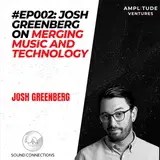
Josh Greenberg, founder of Green Mountain Lodge and former Red Bull and Spotify executive, traces how technology took over the music industry.
Questions these episodes answer
Why doesn't music streaming pay most independent artists a living income?
Ascarez says streaming works well for promotion and distribution but only about 0.5 percent of artists, meaning the biggest acts, actually make a living from it. That gap is why Winamp built a separate platform to help independent artists collect revenue beyond streaming.
What services does Winamp for Creators offer independent artists?
Winamp for Creators works like an ERP for music professionals, aggregating distribution, royalty and publishing collection, YouTube Content ID revenue, music licensing through Jamendo, fan shops and collectibles, plus a website builder and advertising tools, all built from scratch over about three and a half years.
What is the history of Winamp's parent company?
Ascarez joined the radio startup Radionomy in 2010, which acquired Shoutcast and Winamp from AOL in 2013 and later TargetSpot. The group sold to Vivendi in 2017, was bought back in 2019, sold Radionomy and TargetSpot in 2022 to focus on Winamp, and became Winamp Group, publicly traded on Euronext Paris.
Why did Utopia Music's acquisition strategy fail, in Ascarez's view?
Ascarez says Utopia Music bought seven to fifteen companies at once with people who lacked music and technology experience, expecting the combination alone to create one strong company. He believes that lack of vision and industry knowledge caused the failure, and prefers building core services with selective acquisitions instead.
Does Ascarez think music tech is a good space for young people to build a career in?
Ascarez admits he would not recommend his own son go into the music technology space because it is difficult and not the industry investors chase for returns. He still believes someone has to build in it, and that Winamp can become a European leader within three to five years.
Why do young people pay for South Asian classical music on Saarey?
Irfan says the surprise was that 53% of Saarey's users are 18 to 35, showing the barrier was never that classical music suited older listeners, it was access. Once young South Asians could reach recordings of their own heritage, they started listening close to two hours a day and paying well above regional streaming prices.
How does Saarey Music's licensing model differ from a normal streaming service?
Instead of paying rights holders a share of streaming revenue like Spotify does, Saarey pays a fixed annual licensing fee and adds services such as recording, mixing, mastering and artwork on top. Irfan says this keeps Saarey's margins near 97% while giving artists help they could not otherwise access.
Why does Saarey Music hold a 25-year exclusive license instead of a normal distribution deal?
Saarey holds a 25-year exclusive license on about 90% of Pakistani classical music, giving it a catalog no rival streaming app can replicate. Irfan says the deal works because Saarey adds real value in return, handling recording, mastering and publishing that artists otherwise have no way to do themselves.
How did Saarey Music raise money for a niche streaming platform?
Irfan says Saarey relied mostly on direct outreach rather than warm introductions: 80 to 85% of its funding came from cold contact, and about half came from investors who had followed the company's monthly progress updates for a year or more before deciding to invest.
How does fraud actually work on music streaming platforms?
Batey explains that streaming royalties are paid from a shared pool rather than a fixed rate per stream, so every play a fraudster fakes takes a slice of money that would otherwise go to a real artist. Because the pool is finite and everyone competes for a share of it, running up fake streams directly extracts money from other people.
From: Industrial-Scale Money Laundering in the Music Industry
How does AI make music streaming fraud easier?
Batey says fraudsters used to need hacked user upload platforms or obscure old recordings from Africa, Latin America or Asia just to have enough content to run their schemes. AI removed that barrier, since generating large volumes of new filler tracks became simple, feeding fraud operations that need constant new songs to hide behind.
From: Industrial-Scale Money Laundering in the Music Industry
How is the music industry used for money laundering?
Batey describes organized crime converting cash into cryptocurrency, paying streaming farm operators to run fake plays on specific songs, and then collecting the resulting royalty payouts through shell companies set up in places like Doha, Canada, Hong Kong or Cyprus. Because the industry is largely unprotected, a few hundred million dollars can move this way without anyone noticing.
From: Industrial-Scale Money Laundering in the Music Industry
People
- Thierry Ascarez
- Faraan Irfan
- Andrew Batey
- Morgan Hayduk
- Simon M. Eder
- Gigi Johnson
- Jesse Flores
- Darryl Ballantyne
- Anna Lidell
- Aurélien Hérault
- Gineyda Cornelio
- Britt Randma
- Daniel Nordgård
- Dan Fowler
- Ola Sars
- Con Raso
- David Ponte
- Jeff Liebenson
- Dr. Chinedu Chukwuji
- Hazel Savage
- Sania Haq
- Agnes Chung
- Michael Pelczynski
- Jeff Ponchick
- Einar Helde
- Rasmus Rex
- Josh Greenberg