Company
Allfeat
Allfeat, as described on the show by Jean Christophe Barat.
Episodes (2)
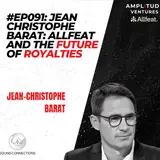
Jean Christophe Barat, founder of Allfeat, explains how blockchain-secured music metadata can fix unpaid royalties and open new web3 monetization for artists.
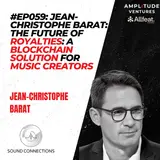
JC Barat, CEO and co-founder of Allfeat, explains how a music-specific layer-one blockchain provides traceability, NFT ownership, and fan community tools.
Questions these episodes answer
How does Allfeat fix music metadata and royalty distribution?
Artists create a Music Industry Decentralized Data Structure profile on Allfeat. Streaming, radio, festivals and podcast platforms deposit proof of distribution and diffusion into the chain, which links to that profile so owners can claim royalties with trustworthy data.
Why do billions in music royalties go unpaid?
Missing or inaccurate metadata stops royalties from reaching the correct owners. Barat says three billion in royalties were poorly distributed in 2024 and that could become five billion by 2030 as independent artists grow rapidly.
What is the proof of metadata consensus?
It is Allfeat's validation system with providers, trust validators and users. Trust validators can confirm metadata accuracy using public documentation, like anyone can say a blue car has four wheels, and community validators approve or reject the data.
How can artists tokenize tickets and music assets on Allfeat?
Barat says ticketing is the easiest blockchain use case because a ticket can be split into 100 parts and linked to NFT access levels such as VIP. Accurate metadata also enables royalty owners to sell, lend or loan their creations.
What is Allfeat?
Allfeat is a layer-one blockchain for music. It combines traceability for intellectual property and royalties, NFT-based ownership for tickets and releases, and token-driven community tools for artists and fans. It is open source and interoperable with Ethereum.
From: Building the Future of Music: Blockchain, AI, and the Allfeat Platform
How does Allfeat handle royalties and metadata?
Allfeat registers artist identity and music metadata in a decentralized data structure called MIDS. When information is linked by a hash, royalties can be automated, so artists do not wait 12 or 24 months for payments.
From: Building the Future of Music: Blockchain, AI, and the Allfeat Platform
Why build on Allfeat instead of Ethereum or another blockchain?
Allfeat provides a music-specific community, one token for governance, and interoperability with Ethereum and EVM chains. According to Barat, developers can build on Allfeat and later move to Ethereum, Polygon, or Avalanche with one or two months of work.
From: Building the Future of Music: Blockchain, AI, and the Allfeat Platform
What role does Allfeat see for blockchain and generative AI?
Barat says blockchain plus AI is the perfect combo. If every song and data point is written to a smart contract, AI training data provenance becomes provable, enabling creator remuneration and traceability.
From: Building the Future of Music: Blockchain, AI, and the Allfeat Platform