Topic
Web3 and Blockchain
Blockchain, tokens and Web3 applications in music rights, ticketing and fan ownership. 11 conversations with founders, investors and experts, newest first.
Episodes (11)
Jean Christophe Barat, founder of Allfeat, explains how blockchain-secured music metadata can fix unpaid royalties and open new web3 monetization for artists.
Takayuki Suzuki of MusicTech Japan discusses Japan's CD dominance, fan club monetization, tiered storytelling, and what Western artists can learn.
Dr. Kobi Abayomi explains how AI music models train on copyrighted songs, why attribution is solvable, and what that means for creator livelihoods.
JC Barat, CEO and co-founder of Allfeat, explains how a music-specific layer-one blockchain provides traceability, NFT ownership, and fan community tools.
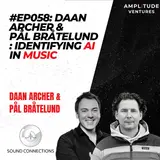
Daan Archer of Copyright Delta and Pål Bråtelund discuss why AI needs registered metadata and accountable infrastructure to pay music rights holders correctly.
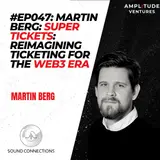
Martin Berg, CEO of DX, explains his super ticket concept, why NFT scalping fixes are overhyped, and how fan data could reward an artist's true fans.

Pål Bråtelund of Music DNA explains how music tech companies can share data and revenue through collaboration instead of chasing an acquisition.
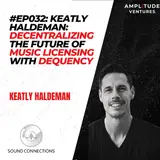
Keatly Haldeman, founder and CEO of Dequency, explains why online sync licensing is broken and how blockchain could fix music rights.
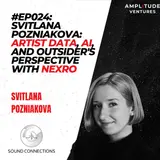
Svitlana Pozniakova, CEO of Nexro, explains how her royalty-exchange startup pivoted into an AI platform that predicts artist careers for labels.
Vickie Nauman, founder of Cross Border Works, explains why streaming capped superfan spending and where Web3 can bring it back.
Sondre Pedersen, CEO of Mintix, explains how blockchain ticketing lets venues and artists earn a share of the secondary ticket market.
Questions these episodes answer
How does Allfeat fix music metadata and royalty distribution?
Artists create a Music Industry Decentralized Data Structure profile on Allfeat. Streaming, radio, festivals and podcast platforms deposit proof of distribution and diffusion into the chain, which links to that profile so owners can claim royalties with trustworthy data.
Why do billions in music royalties go unpaid?
Missing or inaccurate metadata stops royalties from reaching the correct owners. Barat says three billion in royalties were poorly distributed in 2024 and that could become five billion by 2030 as independent artists grow rapidly.
What is the proof of metadata consensus?
It is Allfeat's validation system with providers, trust validators and users. Trust validators can confirm metadata accuracy using public documentation, like anyone can say a blue car has four wheels, and community validators approve or reject the data.
How can artists tokenize tickets and music assets on Allfeat?
Barat says ticketing is the easiest blockchain use case because a ticket can be split into 100 parts and linked to NFT access levels such as VIP. Accurate metadata also enables royalty owners to sell, lend or loan their creations.
Why does Japan's music market still rely heavily on physical CDs?
Japanese CDs are priced high, around 3,000 yen or 20 euros, and come with extra value like bonus artwork, lottery tickets for handshake events, and early tour access. This keeps physical revenue at roughly 70%, though streaming is much cheaper.
From: Superfans and Strategy: How Japan Is Monetizing Fandom
How do Japanese fan clubs work?
Fan clubs are monthly or annual paid subscriptions where fans get early ticket access and exclusive content. This acts as a basic income for artists, letting them focus on creativity and live entertainment quality, which Western artists often lack.
From: Superfans and Strategy: How Japan Is Monetizing Fandom
What can Western music companies learn from Japan about superfans?
Western artists often maximize reach, but Japan shows that fan clubs and tiered storytelling for light, medium, and core fans can create deeper engagement. The low-hanging fruit is adopting the fan club framework and matching storytelling to monetization.
From: Superfans and Strategy: How Japan Is Monetizing Fandom
What is the blockchain opportunity for music fandom?
Blockchain is a public, transparent database that lets brands and creators collaborate directly, enabling digital merchandise, rights management, and cross-border contracts without a central technology company. Taka is optimistic about its long-term potential.
From: Superfans and Strategy: How Japan Is Monetizing Fandom
What opportunity do foreign music startups have in Japan?
Startups outside Japan can help Japanese artists export globally, using streaming and anime momentum, instead of only trying to sell into Japan. This import-export approach is a lower-hanging fruit than just succeeding in the Japanese market.
From: Superfans and Strategy: How Japan Is Monetizing Fandom
How do generative AI music models learn from existing songs?
They ingest large corpora of sound and metadata, often including copyrighted music. In the gold standard approach, people label songs by genre and features, then the model learns a latent space from that data. Models cannot produce beyond what they have been exposed to.
From: The Future of Music Creation: AI's Role in the Industry #aiinmusic
Is AI-generated music protected by copyright?
Currently no. The US Copyright Office has determined that AI generated artwork itself is not deserving of copyright, and it remains open ended whether human authored work with prompting is copyrightable. Tennessee's ELVIS Act separately restricts voice reproductions without permission.
From: The Future of Music Creation: AI's Role in the Industry #aiinmusic
Can artists get royalties when AI models train on their music?
Yes, Dr. Abayomi argues attribution is straightforward. He envisions adding blockchain identifiers to training data so every generated output carries metadata that can be scored, and then payments flow back to the original rights holders when the work is monetized.
From: The Future of Music Creation: AI's Role in the Industry #aiinmusic