Company
Max Planck Institute for Cognitive and Brain Sciences
Max Planck Institute for Cognitive and Brain Sciences, as described on the show by Tom Fritz.
Episodes (1)
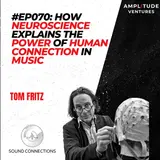
Neuroscientist Tom Fritz of the Max Planck Institute explains why the brain treats AI and human music alike, and why listeners still crave live performance.
Questions these episodes answer
Does AI-generated music affect the brain differently than human-made music?
Fritz says that on a purely physiological level, a listener who knows nothing about who or what made a track responds to comparable AI-generated and human-made music in essentially the same way. What changes the response is not the source of the sound itself but what the listener knows or believes about it.
From: The Neuroscience of Music: Exploring AI, Culture, and the Future of Sound
What did research with the Mafa people in Cameroon reveal about music and emotion?
Fritz's field tests with the Mafa in northern Cameroon found that people there could recognize happiness, sadness and fear in Western music they had never been exposed to before. That result points to some emotional responses to music being universal rather than something a listener has to be culturally taught.
From: The Neuroscience of Music: Exploring AI, Culture, and the Future of Sound
Why does having agency over music change how much people connect with it?
Fritz says agency, whether from being a DJ, playing an instrument, writing a detailed AI prompt, or simply moving in time with a beat, deepens a listener's identification with a piece of music. The more control or active participation someone has, the stronger their emotional connection tends to become.
From: The Neuroscience of Music: Exploring AI, Culture, and the Future of Sound
Why do some listeners say AI-generated music feels soulless?
Fritz explains it through honest signaling: genuine emotion drives fine motor control in a human singer's voice or a musician's playing in ways that are difficult to fake, so listeners pick up on that authenticity. He says he understands the soulless complaint even while thinking the underlying physiological response can be similar either way.
From: The Neuroscience of Music: Exploring AI, Culture, and the Future of Sound
Why are people turning to AI-generated music instead of licensing real songs?
Fritz suggests part of the demand for AI-generated music comes from how difficult and slow it still is to license an existing track for a specific use, even when someone is willing to pay for it. Generating a new track with AI sidesteps that entire licensing process.
From: The Neuroscience of Music: Exploring AI, Culture, and the Future of Sound