Company
Disco
Disco, as described on the show by Karl Richter.
Episodes (1)
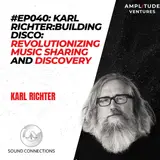
Karl Richter, founder of Disco, explains how a personal file-sharing fix became a music supervision platform, and why founder stress never fully goes away.
Questions these episodes answer
What problem led Karl Richter to build Disco?
Richter says he had lost his iTunes music collection, which supervisors used at the time to manage files, multiple times over, and watched his team lose hours uploading and downloading tracks through consumer tools like WeTransfer that were never built for a business. That personal frustration, rather than a plan to start a company, is what led him to build Disco for his own team first.
From: Building DISCO: Revolutionizing Music Sharing and Discovery
Why did Karl Richter's first music venture, a record label, fail?
Richter first tried running an independent record label, Level 2, but says his personal taste in independent bands turned out not to be a reliable basis for a profitable business. That failure pushed him toward music supervision instead, placing songs in ads and film, which became the foundation Disco was later built on top of.
From: Building DISCO: Revolutionizing Music Sharing and Discovery
Why does running a bootstrapped startup create so much stress for a founder?
Richter says his stress levels have always been high, and that comes with the territory of running a bootstrapped company where a founder personally carries responsibility for the people whose salaries depend on the business staying alive. He says the goal is not to eliminate that stress but to keep it from overloading you while still using it as fuel.
From: Building DISCO: Revolutionizing Music Sharing and Discovery
What mistake do founders make when they try to build something at scale too quickly?
Richter warns against rushing to build something at scale before validating that it actually resonates at a granular, day-to-day level with real users. He calls that unglamorous testing phase the hard boring bit, and says founders who skip it, especially those with only a surface understanding of the music industry, make it harder for genuinely valid startups to get funded.
From: Building DISCO: Revolutionizing Music Sharing and Discovery