Company
Center for Digital Music
Center for Digital Music, as described on the show by Pedro Sarmento.
Episodes (1)
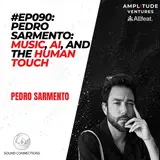
Pedro Sarmento, postdoctoral researcher at the Center for Digital Music, explains why AI threatens the music business more than human creativity itself.
Questions these episodes answer
Does Pedro Sarmento think AI will replace musicians?
Sarmento says AI poses little threat to music as a creative experience, since the reasons people love a band, such as their sound, story or the causes they support, go beyond anything a machine can copy. He does think AI will change the commercial side of music, especially functional work like advertisement music, where cost matters more than artistic intent.
Why did Pedro Sarmento's PhD focus on guitar tablature instead of MIDI?
Sarmento explains guitar tablature captures not only which notes are played but exactly how, since a guitarist can play the same note several different ways. He says most AI music research has focused on piano and MIDI instead, even though guitarists make up roughly as much of the research community as pianists.
Does the history of AI beating humans at chess prove AI won't stop people from making music?
Sarmento uses chess as an example: machines have far outperformed humans since the late 90s, yet that never stopped people from playing or caring about chess, and players have even improved by learning from what the machines discovered. He is not certain the comparison holds exactly for music since music is art, but treats it as a hopeful signal.
What does Pedro Sarmento see as a genuine use for AI in music education?
Sarmento points to one-on-one AI tutoring as a strong use case, since studies show students get better results from one-on-one tutoring than from being taught in a class, and AI can offer that kind of attention at scale. He also sees value in AI adapting practice material to a student's own taste in music.
Why does Pedro Sarmento think storytelling will matter more as AI improves?
Sarmento agrees that as AI narrows the gap in raw technical skill, the story and intent behind a performance become what actually sets a human artist apart. He describes a shift away from valuing pure technical polish toward valuing what an artist has to say, which he thinks could open space for more exploratory music once mainstream AI tools saturate the simpler use cases.